
A Moroccan quinoa trial shows why a fertilizer decision needs a realistic water budget—and why a yield response and an environmental footprint must be assessed separately.
What the research shows
Nawal Taaime and colleagues from UC Davis, Mohammed VI Polytechnic University and the Hassan II Institute of Agronomy and Veterinary Medicine studied quinoa in Benguerir, Morocco. In their 30 October 2026 paper, deficit-irrigated plots received 0, 40, 80 or 120 kg N/ha across two seasons.
Yield rose from 695 kg/ha without N to 903 kg/ha at 40 kg N/ha. The higher rates yielded 928 and 969 kg/ha, without statistically significant differences among fertilized treatments. Modeled global warming potential per kilogram of grain nevertheless rose from 1.68 at 40 kg N/ha to 2.67 kg CO₂ equivalent at 120 kg N/ha.
The environmental assessment used IPCC Tier 1 emissions factors, not direct soil-emissions measurements. A separate, fully irrigated organic-amendment experiment differed in design and years; it cannot establish a direct organic-versus-mineral fertilizer ranking. Original methods and results.
Interpret the plateau before changing the rate
SoilBeat’s interpretation is that the next nitrogen increment should earn its place in the plan. If a response curve has flattened, the useful question is which constraint prevents an additional input from becoming additional crop.
This result does not make 40 kg N/ha a universal quinoa recommendation. It was a tested rate in a particular production system. Nor does an uncertain difference between treatments prove their yields are identical. Local conditions and the precision of the experiment matter.
For a field decision, begin with an attainable yield target supported by the season’s water supply. Then assess whether the planned nitrogen supply fits that target. Treat a higher target as a hypothesis requiring evidence, rather than a reason to increase fertilizer automatically.
Make the comparison useful on farm
Record water alongside nitrogen. Keep rainfall, irrigation volumes and timing, root-zone moisture and application records together.
Establish the starting point. Interpret soil mineral N, previous crops and amendment history before assigning the crop’s remaining fertilizer requirement.
Retain comparisons. Use replicated zero-N and stepped-N strips where practical, with consistent management and reliable harvest measurements.
Follow through to return. Compare extra yield and quality with extra fertilizer, irrigation, pumping and application costs.
These are SoilBeat’s proposed decision checks, not outcomes demonstrated by the experiment. A local agronomist should adapt sampling, treatments and timing to the field.
Keep the claims separate
A measured harvest response, a modeled environmental footprint and a farm profit calculation answer different questions. A useful recommendation makes clear which evidence supports each claim and what remains unmeasured.
The practical opportunity is to connect measurements with action: establish the field’s starting condition, identify its likely constraint, test a change and monitor the result. Extra nitrogen should follow evidence that the crop can benefit from it.
References
Taaime, N.; El Gharous, M.; El Mejahed, K.; Chirinda, N.; Choukr-Allah, R.; Pittelkow, C. Sustainable quinoa production in Morocco: balancing productivity and environmental performance. Frontiers in Sustainable Food Systems 10, 2026. doi:10.3389/fsufs.2026.1972809.
AI-generated editorial illustration for SoilBeat — coordinating water and nitrogen decisions in quinoa; conceptual artwork, not study evidence.

Written by
SoilBeat
Related
Other Articles.
DMPP in saline cotton: the field context decides the benefit

by
SoilBeat
Fertilizer
Less mineral nitrogen, stronger reserves: reading a conservation field

by
SoilBeat
Fertilizer
Foliar manganese and zinc: why humidity changes the result

by
SoilBeat
Fertilizer
Organic fertilizer helped maize—but wheat needed a different plan

by
SoilBeat
Fertilizer
Straw return builds soil carbon. What happens to emissions?

by
SoilBeat
Fertilizer
Slurry Injection Saves Nitrogen But What Does It Cost Elsewhere?

by
SoilBeat
Fertilizers
The New Global Fertilizer Map

by
SoilBeat
Fertilizer
Fertilizers
Climate Change
Can Vetch Catch Crops Improve Greenhouse Vegetables and Reduce Fertilizer

by
SoilBeat
Best Practices
Fertilizer
Nutrient Interactions
Soil Health
Turning lab report into a fertilizer recommendation

by
SoilBeat
Fertilizer
Chloride: The Gatekeeper

by
Buse Soysal
Plantsap
Fertilizer
Nutrient Interactions
Sodium: The Opportunist

by
Buse
Plantsap
Fertilizer
Nutrient Interactions
Sulfur: The Finisher

by
Buse Soysal
Plantsap
Fertilizer
Nutrient Interactions
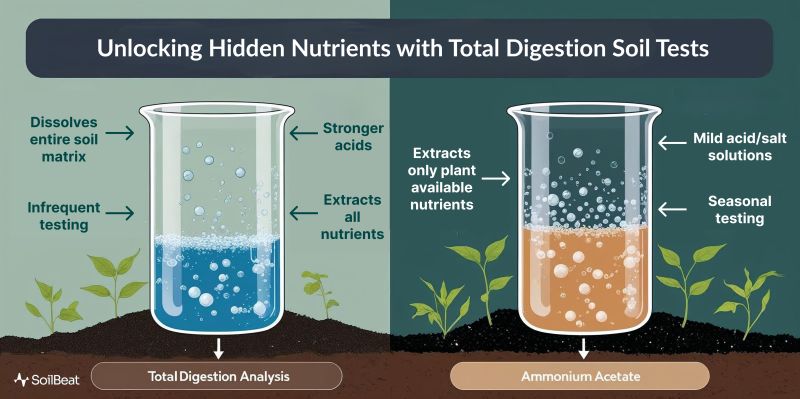
Unlocking Hidden Nutrients with Total Digestion Soil Tests
by
Buse Soysal
Zinc: The Coordinator

by
Buse Soysal
Plantsap
Fertilizer
Nutrient Interactions
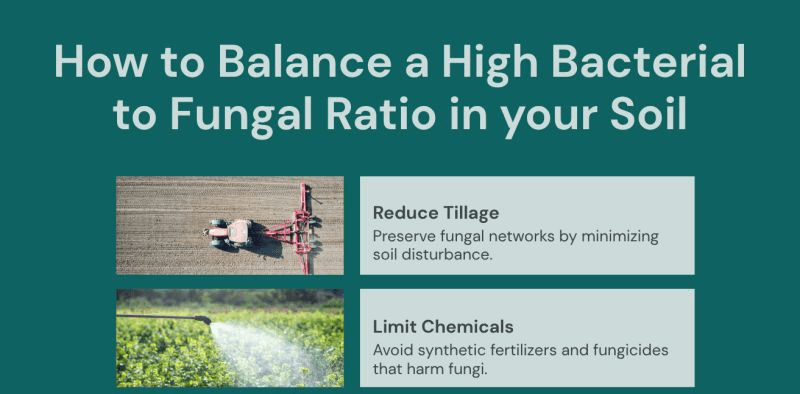
How to Balance a High Bacterial to Fungal Ratio in your Soil
by
Buse Soysal
Soil Health
Magnesium: The Technician

by
Buse Soysal
Plantsap
Fertilizer
Nutrient Interactions
Iron: The Power Engineer

by
Buse Soysal
Plantsap
Fertilizer
Nutrient Interactions
Copper: The Defender

by
Buse Soysal
Plantsap
Fertilizer
Nutrient Interactions
Molybdenum: The Facilitator

by
Buse Soysal
Plantsap
Fertilizer
Nutrient Interactions
Nitrogen: The Builder

by
Buse Soysal
Plantsap
Manganese: The Regulator

by
Buse Soysal
Plantsap
Fertilizer
Nutrient Interactions
Unlocking Smarter Farming with Weather + Nutrient Analytics

by
Buse Soysal
Nutrient Interactions
Water Meets Nutrient Strategy

by
Buse Soysal
Nutrient Interactions
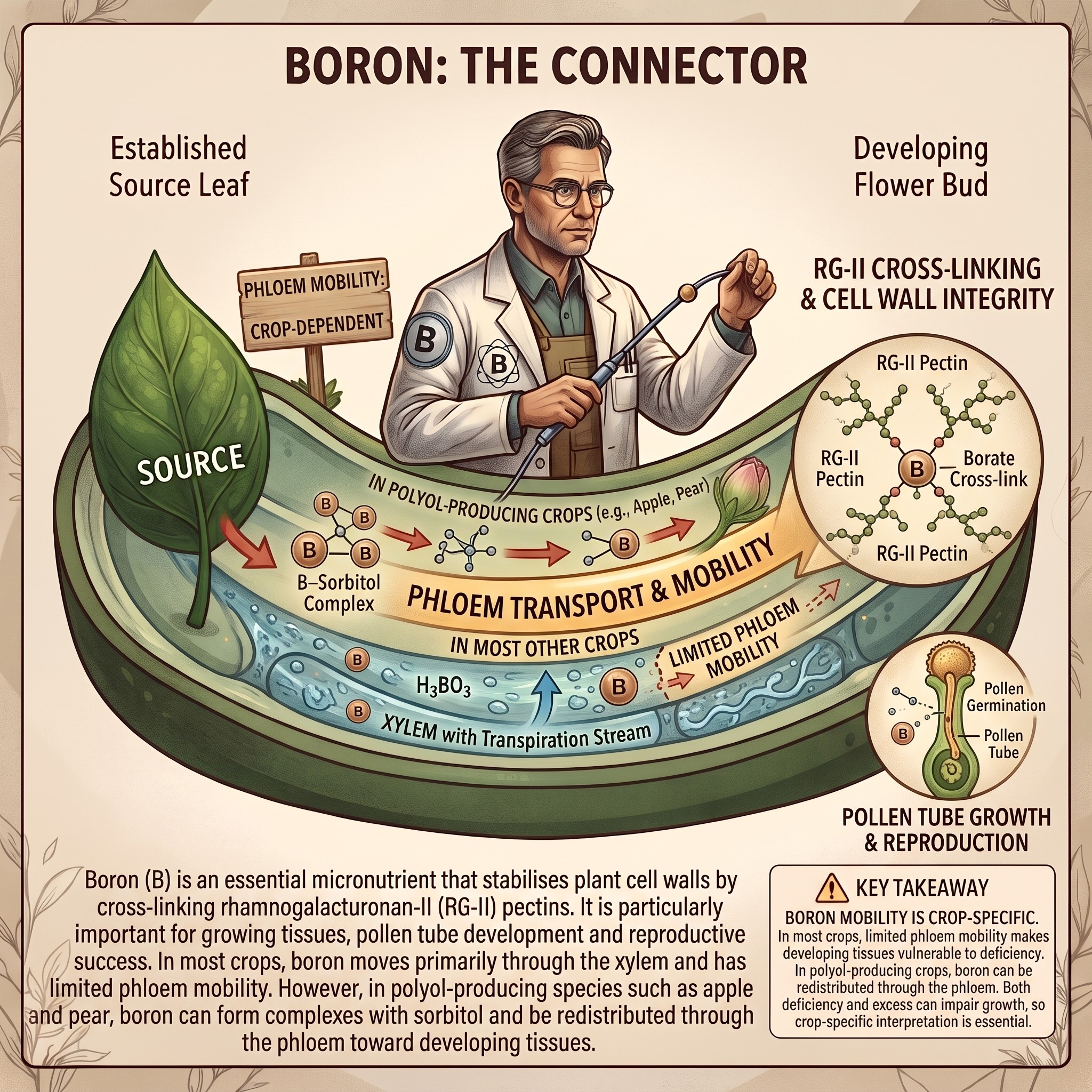
Boron: The Connector
by
Buse Soysal
Plantsap
Nutrient Interactions
Fertilizers
Calcium: The Architect

by
Buse Soysal
Plantsap
Fertilizer
Nutrient Interactions
Potassium: The Logistics Manager

by
Buse Soysal
Plantsap
Phosphorus: The Strategist

by
Buse Soysal
Plantsap
Unit Conversion Meets Crop Intelligence

by
Buse Soysal
Soil Testing
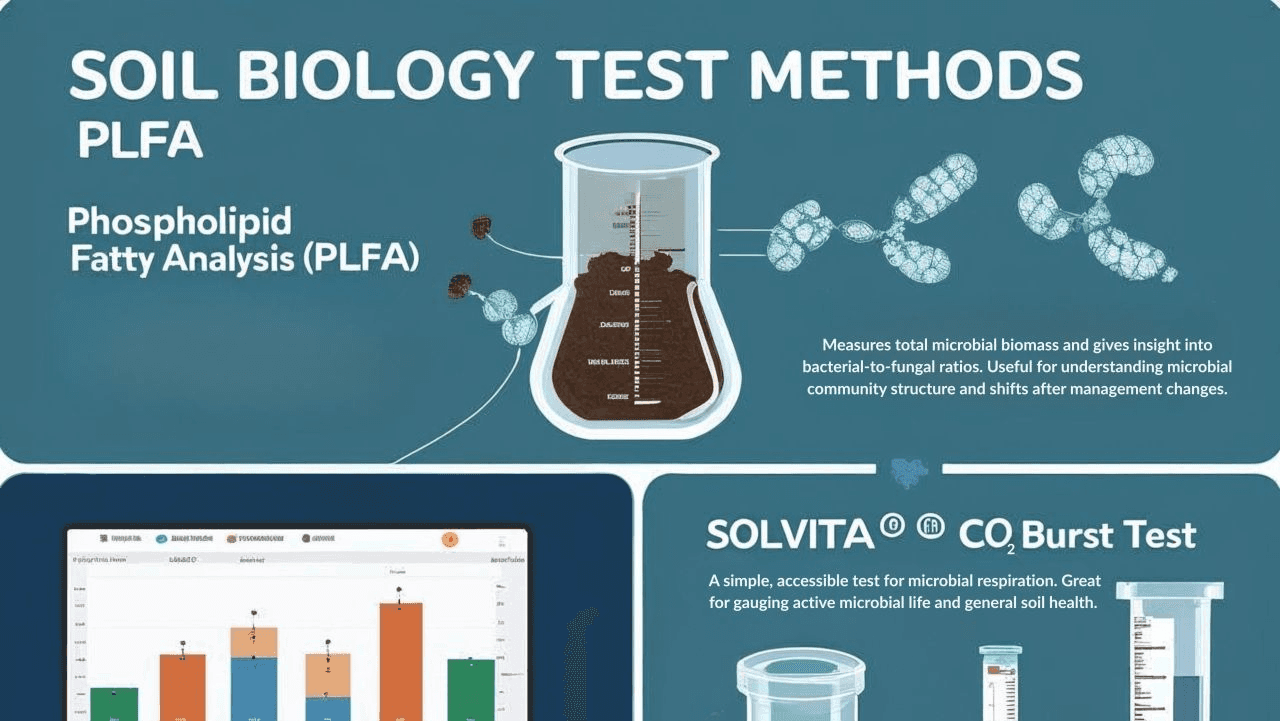
Soil Biology Testing—What Are Your Options?
by
Buse Soysal
Soil Testing
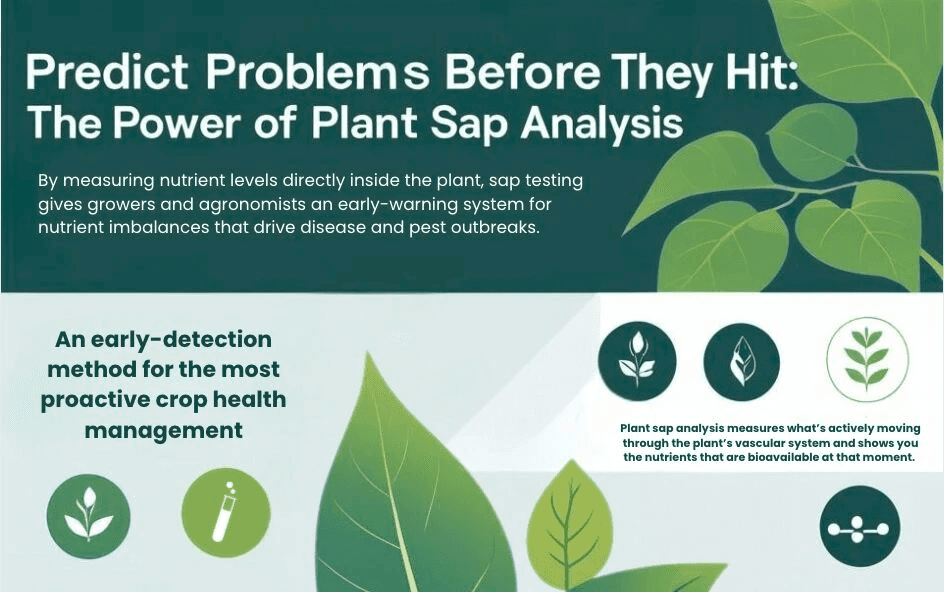
Predict Problems Before They Hit — The Power of Plant Sap Analysis
by
Buse Soysal
Data Analytics
Maximizing Cover Crop Benefits for Your Cash Crop

by
Buse Soysal
Nutrient Interactions
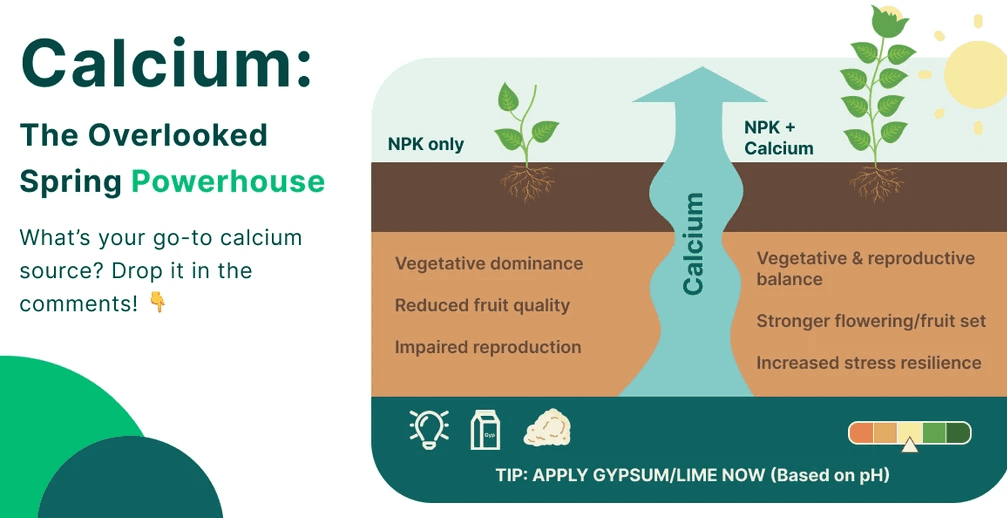
Calcium: The Overlooked Spring Powerhouse
by
Buse Soysal
Nutrient Interactions
Are fertilizer costs cutting into your bottom line?
by
Buse Soysal
Fertilizers
Advancing Precision Irrigation: Leveraging Technology for Sustainable Agriculture

by
Buse Soysal
Soil Health
Unlocking Agriculture’s Hidden Helpers: Microbial Genomics and the Data Challenge

by
Buse Soysal
The importance of microbial amendments: How to increase overall crop resilience

by
Buse Soysal
Soil Health
Unlocking Crop Potential: The Untapped Power of Plant Sap Analysis

by
Buse Soysal
RegenAg
Unlocking Carbon Credits: What Data Farmers Need to Track and How We Can Help

by
Buse Soysal
Data Analytics
Enhancing Weed Management: Leveraging Data Analytics for Sustainable Agriculture
by
Buse Soysal
Data Analytics
Elevating Crop Health with Brix Measurements: The Sweet Science of Plant Immunity

by
Buse Soysal
Soil Health
Nutrient Management and Disease Resistance: Unveiling the Hidden Connections Through Data Analytics

by
Buse Soysal
Base Saturation Balancing: Achieving the Ideal Ratio for Optimal Crop Production

by
Buse Soysal
Soil Health
How to Achieve Zero Excess Free Nitrates and Ammonium in Plant Sap Analysis

by
Buse Soysal
RegenAg
America's Buzzing Backbone: The Crucial Role of Migratory Beekeeping in U.S. Agriculture

by
Buse Soysal
Soil Health
Breaking Down Soil Biology Testing - Finding the ROI with PLFA Tests

by
Buse Soysal
Soil Testing
Precision Agriculture: Revolutionizing Farming, One Field at a Time

by
Buse Soysal
PrecisionAg
Ag101: What is the difference between organic and regenerative agriculture?
by
Buse Soysal
Soil Health
Your Favorite Beans are in Danger: Threats to Coffee & Chocolate Production
by
Buse Soysal
Soil Health
IPM Programs: Best of the Pest Prevention Measures

by
Buse Soysal
Pest & Disease
Wet Spring Issues - Why So Irreparable?

by
Buse Soysal
Nutrient Interactions
The Influence of Nutrient Applications on Post Harvest
by
Buse Soysal
Nutrient Interactions
Orange Juice in Danger: The Threat of HLB Disease

by
Buse Soysal
Soil Health
California Dreaming: The Issue with Almond Production

by
Buse Soysal
Sight Unseen: Zinc Deficiency in Soil

by
Buse Soysal
Nutrient Interactions
Battle Beneath: Understanding Calcium - Potassium Antagonism in Soil

by
Buse Soysal
Nutrient Interactions
The Plant Kingdom's Power Couple: Nitrogen and Sulfur's Synergistic Symphony

by
Buse Soysal
Nutrients for Beginners
Increase Drought Tolerance With This Commonly Missed Micronutrient

by
Buse Soysal
Climate Change
Digging Deeper: The Great Soil Analysis Debate for Regenerative Agriculture

by
Buse Soysal
Soil Health
Ammonium vs Calcium: The Nutrient Balancing Act for Thriving Plants

by
Buse Soysal
Nutrient Interactions
Improving Soil Structure: Boost Your Farm’s Resilience
by
Buse Soysal
Soil Health
Sodium and Calcium Relationship: A Tale of Frenemies in the Soil

by
Buse Soysal
Nutrient Interactions
The Soil Office: Molybdenum and Nitrate's Tumultuous Relationship
by
Buse Soysal
Nutrient Interactions
The Delicate Dance: Achieving the Perfect Nitrogen Balance for Optimal Crop Productivity

by
Buse Soysal
Nutrient Interactions
Paving the Way for a Regenerative Future: Insights into the "Data Driven Regenerative Ag" Project

by
Buse Soysal
RegenAg
Unlocking Soil's Full Potential: The Pioneering Principles of Dr. William A. Albrecht

by
Buse Soysal
Soil Health
The Benefits of Regenerative Agriculture for Human Health

by
Buse Soysal
RegenAg
Responsible Data Exchange in Agriculture

by
Buse Soysal
Data Analytics
Responsible Fertilizer Use for Mitigating Drought

by
Buse Soysal
Climate Change
The Power of Healthy Soil: for a Happy World Earth Day

by
Buse Soysal
Soil Health
Crop Scouting for Regenerative Agriculture
by
Buse Soysal
RegenAg
Plantsap and Soil Analyses for Nitrogen Emission Reduction
by
Buse Soysal
RegenAg
How do you use Plant Nutrition for Regenerative Agriculture?

by
Buse Soysal
RegenAg
Profitability of Regenerative Agriculture and Transition Management

by
Buse Soysal
RegenAg
How can we use Data-Driven Farming for a Bright Future?
by
Buse Soysal
Data Analytics
Plantsap Analysis for More Yield and Less Fertilizer

by
Buse Soysal
RegenAg