
A cotton study found nitrogen-inhibitor benefits under moderate salinity, with no significant field yield gain under low salinity.
This SoilBeat article draws on research by Wenbin Deng, Zhenfeng Miao, Haiping Xie, Xia Wang, Guangming Liu, Rongjiang Yao and Jinlin Chen, published in BMC Plant Biology. The study findings are theirs; the practical interpretation below is SoilBeat’s. Read the original research.
The agronomic problem
Applying the right amount of nitrogen does not guarantee that roots encounter it in the right form, place, or window. That problem is especially sharp in drip-irrigated cotton on saline soils. Urea hydrolyzes quickly, ammonium can be oxidized to nitrate, and nitrate is both mobile in soil water and vulnerable to loss beyond the active root zone. Salinity simultaneously restricts root growth, water uptake, and yield.
A study from Xinjiang, China, asks a more useful question than whether a nitrification inhibitor simply “works”: does slowing nitrification change cotton’s root nitrogen status and assimilation, and does that plant-side response translate into field performance under different levels of salinity?
The answer is conditional. Adding 3,4-dimethylpyrazole phosphate, or DMPP, to urea changed the balance between ammonium and nitrate inside cotton roots and increased a key indicator of ammonium assimilation. Yet the strongest pot response did not transfer uniformly to the field. Across two field seasons, significant yield and nitrogen-efficiency gains appeared under moderate salinity, not low salinity.
Research finding
The researchers combined a greenhouse pot experiment with field validation in 2024 and 2025 near Shihezi, Xinjiang. They used the cotton cultivar Xinluzao 60 and soils classified in the study as low salinity, with 3.63 g/kg total soluble salts, or moderate salinity, with 5.50 g/kg.
Treatments included no nitrogen, urea alone, and urea plus DMPP within each salinity class. Fertilizer supply was identical between the two fertilized treatments: 240 kg N, 109 kg P2O5, and 128 kg K2O per hectare, delivered in nine splits through drip irrigation. DMPP was included at 1% of urea-N by weight. Those values describe the experiment; they are not a universal recommendation.
The pot study used 33 pots per treatment because plants were destructively sampled at multiple times. Measurements included total root length, surface area, volume, dry matter, root ammonium and nitrate, nitrogen-assimilation enzymes, organic acids, soluble sugars, plant N uptake, and seed cotton yield. The field plots were about 102 square meters, with three replicates per treatment in each year.
DMPP produced the clearest physiological signal in the root’s nitrogen form. Root ammonium tended to be higher and root nitrate lower than with urea alone. The ratio of glutamine synthetase to glutamate dehydrogenase, or GS/GDH, was significantly higher. In the field, root ammonium and GS/GDH were significantly higher with DMPP under both salinity levels 72 hours after the fifth fertilization.
Pot seed cotton yield increased by about 12% under low salinity and 22% under moderate salinity. Total plant N uptake also increased, but yield per unit of plant N—how this pot study defined NUE—was similar between urea and urea plus DMPP.
Field performance was more restrained. Under moderate salinity, DMPP significantly increased seed cotton yield, partial factor productivity, and agronomic efficiency in both seasons. Under low salinity, those differences were not significant. The paper describes the field response as closer to the 1–7% average yield gains reported in earlier inhibitor syntheses than to the double-digit pot response.
Agronomic interpretation
DMPP acts mainly in soil, not as a direct plant stimulant. It slows ammonium oxidation by ammonia-oxidizing microorganisms, particularly bacteria, although the strength and duration of inhibition depend on temperature, moisture, pH, organic matter, and microbial community.
That changes the form of nitrogen presented to roots. Nitrate uptake requires reduction before incorporation into amino acids. Ammonium can enter the GS–GOGAT pathway more directly, but excessive ammonium can be toxic and its uptake releases protons, acidifying the rhizosphere. The agronomic objective is therefore not “more ammonium” in isolation. It is a better-timed balance of ammonium and nitrate within a concentration range the crop can assimilate.
The higher GS/GDH ratio is consistent with stronger use of the main ammonium-assimilation pathway. The authors also measured higher numerical values for root length, root mass, organic-carbon exudation, citrate, malate, and soluble sugars. Most of those differences, however, were not statistically significant. They are plausible supporting observations—rather than proof that DMPP substantially rebuilt the root system or engineered the rhizosphere.
The paper’s path model linked higher root ammonium with GS/GDH, root dry matter, N uptake, and yield. But the model combined measurements from different times and included the unfertilized control. It describes coordinated associations across treatments; it does not establish that the incremental yield effect of DMPP flowed through that exact causal chain.
Why the salinity interaction matters
Salinity changes both plant demand and soil N behavior. Osmotic stress limits water uptake; sodium and chloride can disrupt ion balance; roots may explore less soil; and transpiration-driven nutrient transport can decline. Meanwhile, salinity can suppress nitrification by itself. The net response to an inhibitor is therefore difficult to predict from salinity alone.
In this trial, absolute yields were lower under moderate salinity, yet the relative field advantage of DMPP was clearer there. One reasonable interpretation is that retaining ammonium longer improved N availability when root function and nitrate recovery were already constrained. Another is simply that the tested moderate-salinity environment created a larger loss or timing problem for DMPP to solve. The trial did not directly measure nitrate leaching, ammonia loss, or nitrous oxide, so those explanations remain hypotheses.
The absence of a significant response under low salinity is equally important. Enhanced-efficiency fertilizers add cost. If the dominant N-loss pathway is small, or irrigation and split timing already match uptake well, preserving more ammonium may not generate an economic return.
Possible management implication
This work supports diagnosis before product choice. For drip-irrigated cotton, relevant measurements include soil salinity and pH, texture and drainage, irrigation volume and distribution, soil ammonium and nitrate through the fertigation window, tissue N, rooting depth, and yield response. Weather matters because temperature and moisture regulate nitrification and inhibitor persistence.
A field comparison should keep the N rate, application timing, water, and other nutrients equal. Replicated strips should span meaningful salinity or management zones rather than mixing them into one field average. Success should be judged with partial profit as well as yield: inhibitor cost, application logistics, lint or seed quality, and any verified reduction in N loss belong in the calculation.
Plant measurements can improve interpretation but need care. Tissue or sap analysis may reveal whether N form and timing altered plant status, yet a single concentration can be diluted by growth or distorted by sampling time. Repeated, stage-consistent sampling is more informative than chasing one threshold.
Limitations and unknowns
The research covered one cultivar, one N program, one location, two salinity categories, and two field seasons. Each field treatment had three replicates per year. It did not report a farm budget, fiber-quality response, N2O emissions, nitrate leaching, ammonia volatilization, or inhibitor residues. Gene expression was not measured. The article was also released as an accepted article in press and may receive editorial changes before its final version of record.
The pot yield gains should not be projected onto commercial fields. Pots offer uniform water and nutrient distribution and restrict rooting volume. The field result—significant under moderate salinity and nonsignificant under low salinity—is the more defensible guide to commercial expectations.
SoilBeat perspective
This study shows why nitrogen decisions need more than a rate. DMPP changed the form and timing of N supply, the plant registered that change in root ammonium and assimilation, and the agronomic benefit depended on field context.
The practical sequence is to measure the constraint, interpret the likely N-loss pathway, compare an equal-N intervention, and monitor both plant and economic response. Inhibitors are most valuable when they solve a diagnosed mismatch between nitrogen transformation and crop uptake—rather than when they are added automatically to an already efficient program.
References
Wenbin Deng, Zhenfeng Miao, Haiping Xie, Xia Wang, Guangming Liu, Rongjiang Yao and Jinlin Chen (2026). DMPP alters cotton root nitrogen assimilation, morphology and exudation under salinity: evidence from pot and two-year field experiments. BMC Plant Biology.
AI-generated editorial illustration for SoilBeat. Conceptual imagery; not a photograph or figure from the study.

Written by
SoilBeat
Related
Other Articles.
When water sets the ceiling on nitrogen response

by
SoilBeat
Fertilizer
Less mineral nitrogen, stronger reserves: reading a conservation field

by
SoilBeat
Fertilizer
Foliar manganese and zinc: why humidity changes the result

by
SoilBeat
Fertilizer
Organic fertilizer helped maize—but wheat needed a different plan

by
SoilBeat
Fertilizer
Straw return builds soil carbon. What happens to emissions?

by
SoilBeat
Fertilizer
Slurry Injection Saves Nitrogen But What Does It Cost Elsewhere?

by
SoilBeat
Fertilizers
The New Global Fertilizer Map

by
SoilBeat
Fertilizer
Fertilizers
Climate Change
Can Vetch Catch Crops Improve Greenhouse Vegetables and Reduce Fertilizer

by
SoilBeat
Best Practices
Fertilizer
Nutrient Interactions
Soil Health
Turning lab report into a fertilizer recommendation

by
SoilBeat
Fertilizer
Chloride: The Gatekeeper

by
Buse Soysal
Plantsap
Fertilizer
Nutrient Interactions
Sodium: The Opportunist

by
Buse
Plantsap
Fertilizer
Nutrient Interactions
Sulfur: The Finisher

by
Buse Soysal
Plantsap
Fertilizer
Nutrient Interactions
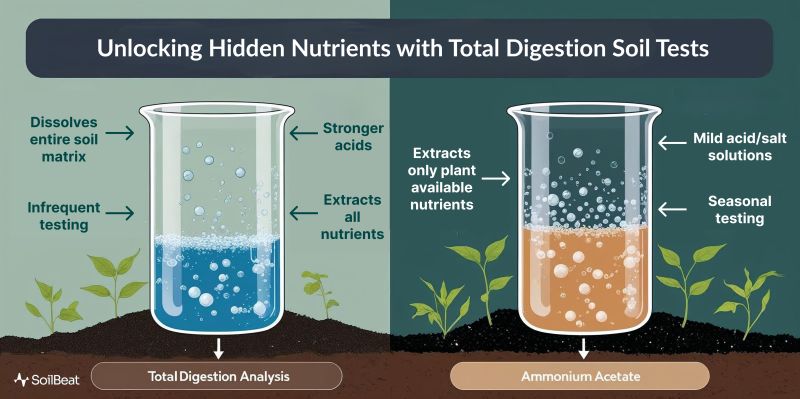
Unlocking Hidden Nutrients with Total Digestion Soil Tests
by
Buse Soysal
Zinc: The Coordinator

by
Buse Soysal
Plantsap
Fertilizer
Nutrient Interactions
How to Balance a High Bacterial to Fungal Ratio in your Soil

by
Buse Soysal
Soil Health
Magnesium: The Technician

by
Buse Soysal
Plantsap
Fertilizer
Nutrient Interactions
Iron: The Power Engineer

by
Buse Soysal
Plantsap
Fertilizer
Nutrient Interactions
Copper: The Defender

by
Buse Soysal
Plantsap
Fertilizer
Nutrient Interactions
Molybdenum: The Facilitator

by
Buse Soysal
Plantsap
Fertilizer
Nutrient Interactions
Nitrogen: The Builder

by
Buse Soysal
Plantsap
Manganese: The Regulator

by
Buse Soysal
Plantsap
Fertilizer
Nutrient Interactions
Unlocking Smarter Farming with Weather + Nutrient Analytics

by
Buse Soysal
Nutrient Interactions
Water Meets Nutrient Strategy

by
Buse Soysal
Nutrient Interactions
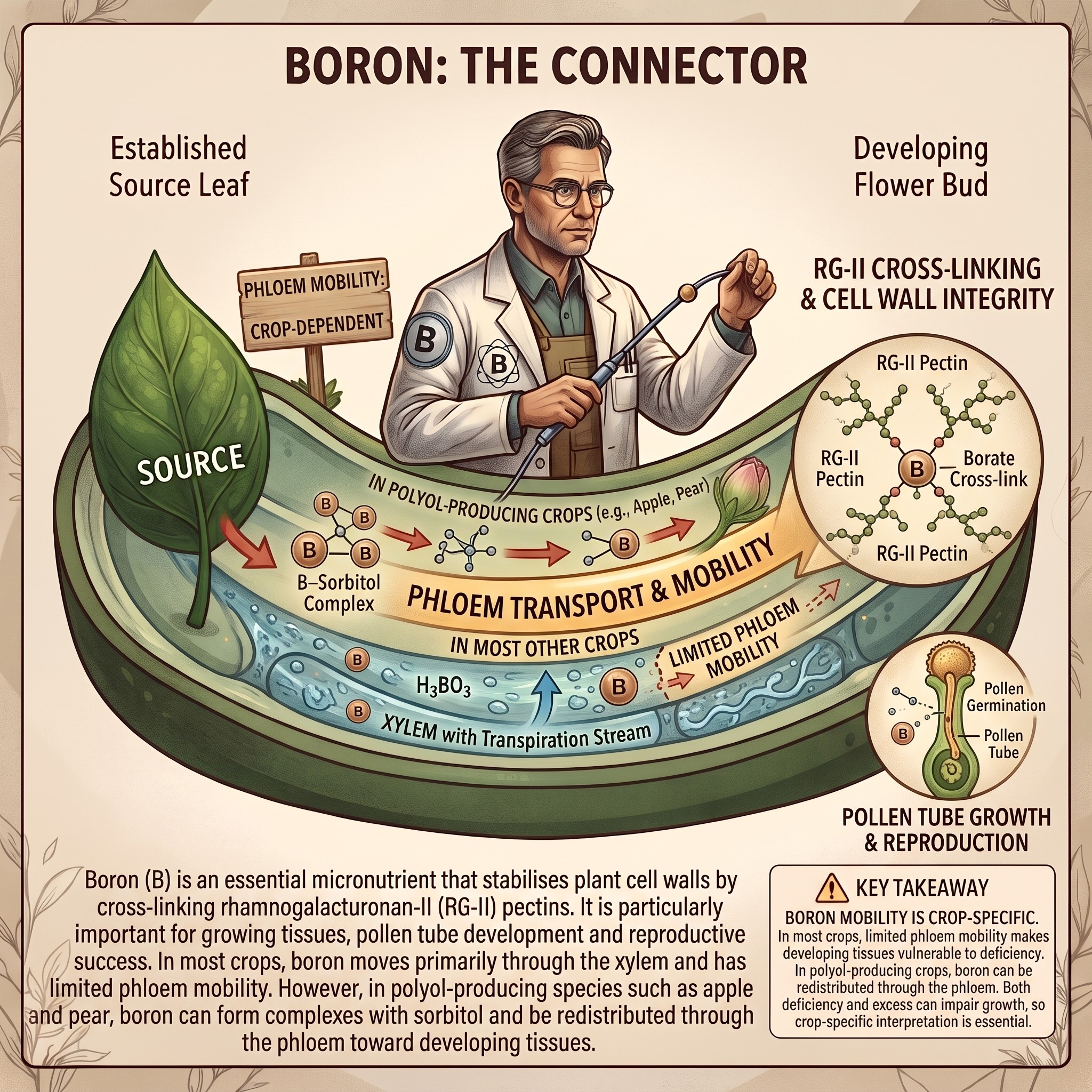
Boron: The Connector
by
Buse Soysal
Plantsap
Nutrient Interactions
Fertilizers
Calcium: The Architect

by
Buse Soysal
Plantsap
Fertilizer
Nutrient Interactions
Potassium: The Logistics Manager

by
Buse Soysal
Plantsap
Phosphorus: The Strategist

by
Buse Soysal
Plantsap
Unit Conversion Meets Crop Intelligence

by
Buse Soysal
Soil Testing
Soil Biology Testing—What Are Your Options?
by
Buse Soysal
Soil Testing
Predict Problems Before They Hit — The Power of Plant Sap Analysis
by
Buse Soysal
Data Analytics
Maximizing Cover Crop Benefits for Your Cash Crop

by
Buse Soysal
Nutrient Interactions
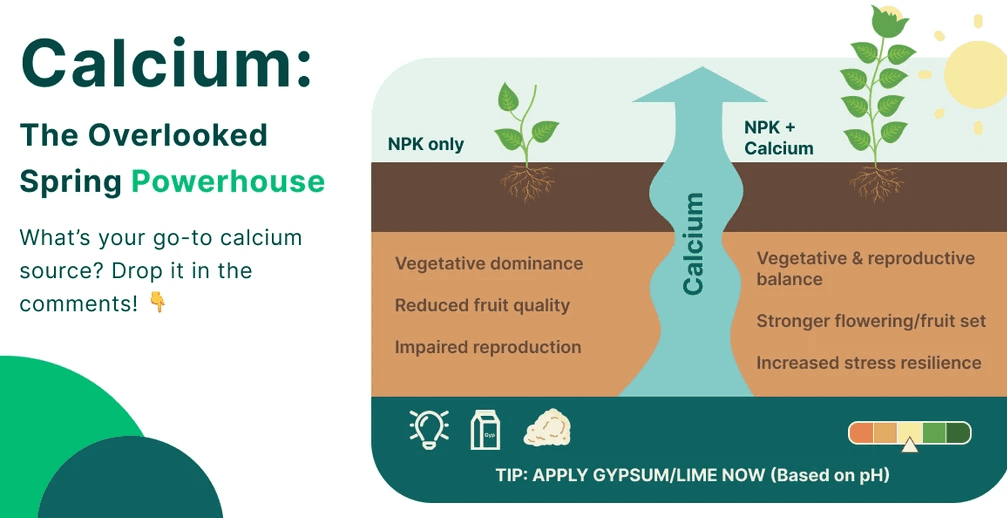
Calcium: The Overlooked Spring Powerhouse
by
Buse Soysal
Nutrient Interactions
Are fertilizer costs cutting into your bottom line?
by
Buse Soysal
Fertilizers
Advancing Precision Irrigation: Leveraging Technology for Sustainable Agriculture

by
Buse Soysal
Soil Health
Unlocking Agriculture’s Hidden Helpers: Microbial Genomics and the Data Challenge

by
Buse Soysal
The importance of microbial amendments: How to increase overall crop resilience

by
Buse Soysal
Soil Health
Unlocking Crop Potential: The Untapped Power of Plant Sap Analysis

by
Buse Soysal
RegenAg
Unlocking Carbon Credits: What Data Farmers Need to Track and How We Can Help

by
Buse Soysal
Data Analytics
Enhancing Weed Management: Leveraging Data Analytics for Sustainable Agriculture
by
Buse Soysal
Data Analytics
Elevating Crop Health with Brix Measurements: The Sweet Science of Plant Immunity

by
Buse Soysal
Soil Health
Nutrient Management and Disease Resistance: Unveiling the Hidden Connections Through Data Analytics

by
Buse Soysal
Base Saturation Balancing: Achieving the Ideal Ratio for Optimal Crop Production

by
Buse Soysal
Soil Health
How to Achieve Zero Excess Free Nitrates and Ammonium in Plant Sap Analysis

by
Buse Soysal
RegenAg
America's Buzzing Backbone: The Crucial Role of Migratory Beekeeping in U.S. Agriculture

by
Buse Soysal
Soil Health
Breaking Down Soil Biology Testing - Finding the ROI with PLFA Tests

by
Buse Soysal
Soil Testing
Precision Agriculture: Revolutionizing Farming, One Field at a Time

by
Buse Soysal
PrecisionAg
Ag101: What is the difference between organic and regenerative agriculture?
by
Buse Soysal
Soil Health
Your Favorite Beans are in Danger: Threats to Coffee & Chocolate Production
by
Buse Soysal
Soil Health
IPM Programs: Best of the Pest Prevention Measures

by
Buse Soysal
Pest & Disease
Wet Spring Issues - Why So Irreparable?

by
Buse Soysal
Nutrient Interactions
The Influence of Nutrient Applications on Post Harvest
by
Buse Soysal
Nutrient Interactions
Orange Juice in Danger: The Threat of HLB Disease

by
Buse Soysal
Soil Health
California Dreaming: The Issue with Almond Production

by
Buse Soysal
Sight Unseen: Zinc Deficiency in Soil

by
Buse Soysal
Nutrient Interactions
Battle Beneath: Understanding Calcium - Potassium Antagonism in Soil

by
Buse Soysal
Nutrient Interactions
The Plant Kingdom's Power Couple: Nitrogen and Sulfur's Synergistic Symphony

by
Buse Soysal
Nutrients for Beginners
Increase Drought Tolerance With This Commonly Missed Micronutrient

by
Buse Soysal
Climate Change
Digging Deeper: The Great Soil Analysis Debate for Regenerative Agriculture

by
Buse Soysal
Soil Health
Ammonium vs Calcium: The Nutrient Balancing Act for Thriving Plants

by
Buse Soysal
Nutrient Interactions
Improving Soil Structure: Boost Your Farm’s Resilience
by
Buse Soysal
Soil Health
Sodium and Calcium Relationship: A Tale of Frenemies in the Soil

by
Buse Soysal
Nutrient Interactions
The Soil Office: Molybdenum and Nitrate's Tumultuous Relationship
by
Buse Soysal
Nutrient Interactions
The Delicate Dance: Achieving the Perfect Nitrogen Balance for Optimal Crop Productivity

by
Buse Soysal
Nutrient Interactions
Paving the Way for a Regenerative Future: Insights into the "Data Driven Regenerative Ag" Project

by
Buse Soysal
RegenAg
Unlocking Soil's Full Potential: The Pioneering Principles of Dr. William A. Albrecht

by
Buse Soysal
Soil Health
The Benefits of Regenerative Agriculture for Human Health

by
Buse Soysal
RegenAg
Responsible Data Exchange in Agriculture

by
Buse Soysal
Data Analytics
Responsible Fertilizer Use for Mitigating Drought

by
Buse Soysal
Climate Change
The Power of Healthy Soil: for a Happy World Earth Day

by
Buse Soysal
Soil Health
Crop Scouting for Regenerative Agriculture

by
Buse Soysal
RegenAg
Plantsap and Soil Analyses for Nitrogen Emission Reduction

by
Buse Soysal
RegenAg
How do you use Plant Nutrition for Regenerative Agriculture?

by
Buse Soysal
RegenAg
Profitability of Regenerative Agriculture and Transition Management

by
Buse Soysal
RegenAg
How can we use Data-Driven Farming for a Bright Future?

by
Buse Soysal
Data Analytics
Plantsap Analysis for More Yield and Less Fertilizer

by
Buse Soysal
RegenAg