10 sep 2025
Manganese: The Regulator
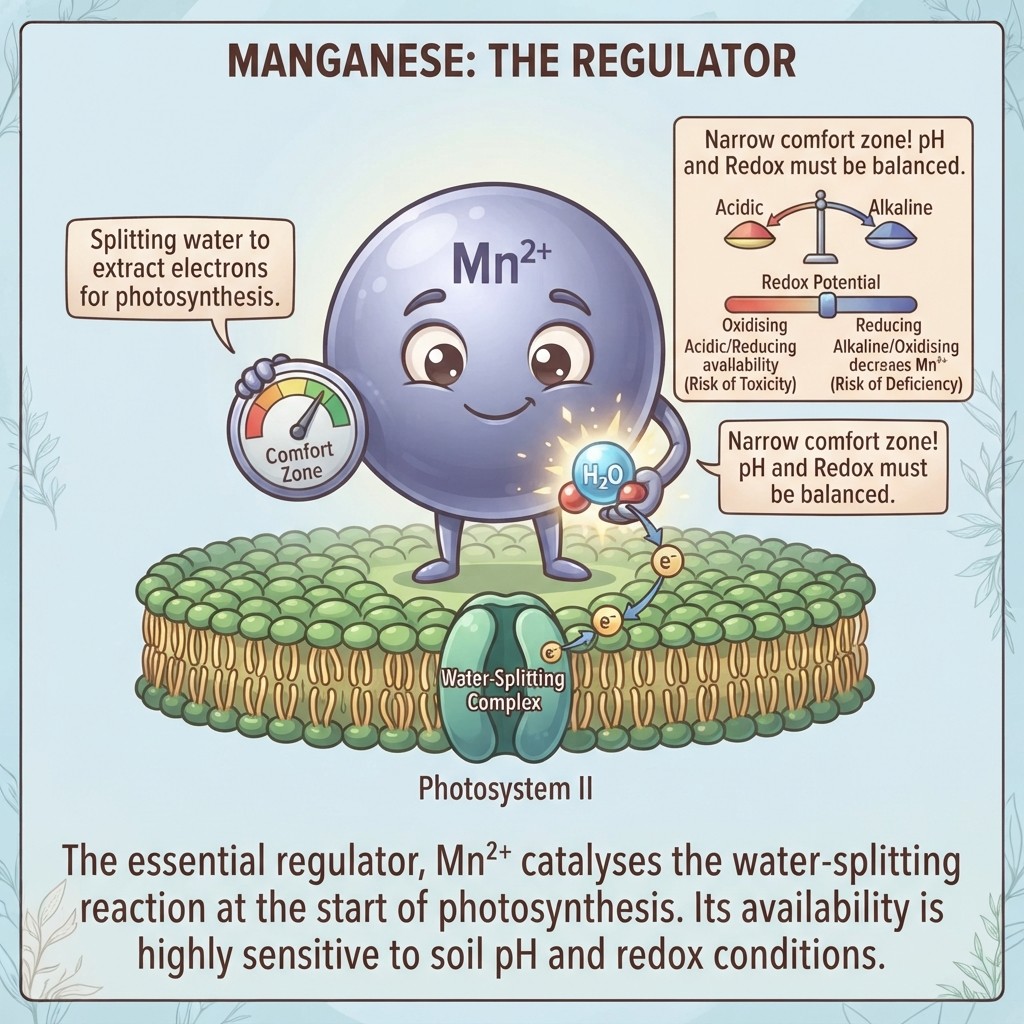
Manganese: The Regulator
Manganese is required in relatively small amounts, but it plays a central role in processes that determine how efficiently the plant captures light, manages oxidative stress and builds structural and biochemical defences. One of its most important functions is in Photosystem II, where manganese is part of the oxygen-evolving complex that allows the plant to split water and release the electrons needed to start the photosynthetic electron transport chain. In practical terms, manganese helps initiate one of the most fundamental reactions in photosynthesis.
That makes manganese well suited to the role of The Regulator. It does not dominate growth in the way nitrogen does, and it does not manage transport like potassium, but it helps control several systems that determine whether the plant can use light, maintain enzyme activity and respond to stress. The challenge is that manganese is highly sensitive to root-zone chemistry, especially pH and redox conditions, so a crop can move from deficiency to excess more quickly than growers sometimes expect.
Manganese’s personality: sensitive, influential and highly dependent on the environment
Manganese’s greatest strength is that it supports several key metabolic systems at once. It contributes directly to photosynthesis, activates or supports a range of enzymes and is involved in antioxidant metabolism, phenolic compounds and lignification. This means adequate Mn can support both energy production and structural defence.
Its main weakness is that availability changes strongly with pH, oxidation-reduction conditions and soil moisture. A soil may contain plenty of total manganese but provide very little plant-available Mn2+ if the conditions favour oxidised, insoluble forms. Under more reducing conditions, the opposite can happen: Mn2+ can become much more available and, if the shift is strong enough, toxicity can develop.
The Regulator therefore depends on balance more than abundance. It performs best when the root zone keeps manganese available without allowing it to become excessive.
Manganese’s greatest strength: starting photosynthesis
Manganese has one of the most distinctive roles of any micronutrient because it is part of the oxygen-evolving complex in Photosystem II. This complex is responsible for splitting water, releasing electrons that enter the photosynthetic electron transport chain.
Without enough Mn, the plant cannot run this early stage of photosynthesis efficiently. The problem then extends beyond the Mn concentration itself, because reduced electron flow means less energy is available for carbon fixation and growth.
This is why manganese deficiency can affect crop performance before dramatic visual symptoms appear. A plant may still look reasonably green while photosynthetic efficiency is already declining.
Manganese and antioxidant metabolism
Manganese also contributes to the plant’s ability to manage oxidative stress. One important example is manganese superoxide dismutase, an enzyme involved in protecting cells from reactive oxygen species.
This means Mn is not only involved in producing energy but also in helping the plant manage some of the oxidative pressure that comes with active metabolism and stress.
In practical terms, a crop with poor Mn status may be less efficient both at generating energy and at protecting itself from the by-products of that metabolism.
Manganese and plant defence
Manganese is often associated with lignification, phenolic metabolism and defence-related processes. This is useful, but it should not be oversimplified into the claim that manganese directly creates disease resistance or that one pathway, such as the shikimate pathway, simply “switches off” when Mn is low.
A better way to understand the relationship is that adequate manganese supports several enzyme systems involved in structural and biochemical defence, including lignin formation and phenolic metabolism. When Mn is deficient, those systems can become less effective, which may leave the plant more vulnerable under certain disease pressures.
The exact effect depends on crop, pathogen, environment and the wider nutrient balance.
Manganese’s main weakness: pH sensitivity
Root-zone pH is one of the strongest influences on manganese availability.
As pH rises, Mn2+ tends to be oxidised into less soluble forms, which makes it more difficult for roots to absorb. This is why manganese deficiency is common in alkaline, heavily limed or calcareous soils.
At lower pH, Mn becomes more soluble. That can improve availability when supply is marginal, but if the soil becomes too acidic the crop can experience excessive Mn uptake.
The relationship is therefore not simply “low pH is good” or “high pH is bad.” The correct target is a pH range that keeps Mn available without pushing it toward toxicity.
Manganese and redox conditions: one of its most important interactions
Manganese is also highly sensitive to oxidation-reduction conditions in the soil.
Under well-oxidised conditions, Mn2+ can be converted into less soluble manganese oxides, reducing plant availability. Under reducing conditions, such as waterlogged soils, those oxides can be converted back toward Mn2+, sharply increasing solubility.
This means waterlogging can increase manganese availability rather than reduce it. In some crops and soils, that increase may temporarily improve Mn uptake, but if the root zone remains strongly reducing, Mn can accumulate to toxic levels.
This is why the statement that manganese simply “needs oxygen” is too simplistic. The plant needs healthy root aeration, but Mn availability depends on the balance between oxidation and reduction in the root zone.
Manganese and iron: two closely linked micronutrients
Iron is one of manganese’s most important interaction partners because both elements are redox-active and both are strongly influenced by pH and root-zone chemistry.
They can also compete.
High manganese can reduce iron uptake or interfere with Fe function, while very high iron can suppress Mn under some conditions. For this reason, Fe and Mn should usually be interpreted together in plant sap.
A pattern of high Mn with low Fe can point toward competition or root-zone chemistry favouring Mn, while high Fe with low Mn may indicate the opposite imbalance.
The important point is that Fe and Mn are not permanent antagonists. Their relationship becomes problematic mainly when one moves too far out of balance.
Manganese and magnesium: different roles, possible competition
Magnesium and manganese both support photosynthesis, but they do so in very different ways. Magnesium sits at the centre of chlorophyll, while manganese is involved in water splitting in Photosystem II.
Because both are cations, strong Mg supply can sometimes contribute to reduced Mn uptake, especially where other root-zone conditions already limit manganese availability. This interaction is usually less direct than the classic K-Mg competition, but it becomes relevant when Mn is low despite apparently adequate soil reserves.
A crop with low Mn and high Mg should therefore be evaluated in the context of pH, root-zone chemistry and overall cation balance rather than assuming a simple lack of Mn supply.
Manganese and calcium: indirect competition through balance and pH
Calcium can also influence manganese availability. The interaction is often indirect because high Ca is frequently associated with liming and increased soil pH, both of which can reduce Mn availability.
This means a crop may show declining Mn after heavy liming even when soil Mn itself has not changed.
For growers, this is an important reminder that nutrient interactions are not always direct competition at the root membrane. Sometimes one nutrient changes the root-zone environment in a way that affects another.
Manganese and phosphorus: context matters
Manganese and phosphorus can interact in several ways, depending on soil chemistry and plant status. High phosphorus can sometimes alter Mn availability or uptake, while manganese oxides in soil can also influence phosphate behaviour.
The relationship is complex enough that it should not be described as a simple antagonism.
In practical terms, if sap analysis shows high P with low Mn, the pattern is worth investigating, but the grower should also examine pH, iron status and root-zone conditions before assuming phosphorus is the sole cause.
What happens when manganese is too low?
Because manganese is relatively poorly remobilised, deficiency often becomes most visible in younger or recently expanded leaves, although the exact pattern can vary between crops.
As Mn becomes limiting, photosynthetic efficiency declines and chlorophyll development becomes uneven. The crop may also lose some capacity for antioxidant protection and structural defence.
Deficiency can therefore reduce growth even before severe visual symptoms appear.
Visual clues of manganese deficiency
Typical symptoms can include:
• Interveinal chlorosis, often on younger or recently expanded leaves
• Green veins with lighter tissue between them
• Small grey, tan or necrotic specks in some crops
• Reduced leaf expansion
• Loss of vigour
• Weaker photosynthetic performance
• Reduced structural strength or slower recovery from stress
• Crop-specific spotting or mottling
Symptoms can resemble iron or magnesium deficiency, so leaf position and sap data are useful for distinguishing between them.
What happens when manganese is too high?
Manganese toxicity is more likely in acidic, waterlogged or strongly reducing soils where Mn2+ becomes highly soluble.
When Mn accumulates excessively, it can create oxidative stress and interfere with the uptake or function of other nutrients, especially iron and magnesium. Root function can also decline, which then affects the wider nutrient system.
The crop may therefore show both direct Mn toxicity and secondary nutrient deficiencies at the same time.
Visual clues of manganese excess
Possible symptoms include:
• Brown, black or dark speckling on leaves
• Necrotic spotting
• Leaf crinkling or distortion in sensitive crops
• Reduced root growth
• Poor crop vigour
• Iron-deficiency-like chlorosis caused by Mn-Fe imbalance
• Premature ageing of older leaves in severe cases
The exact expression depends strongly on crop and growing conditions.
Manganese imbalance: when the number reflects the root zone
Manganese is one of the nutrients where plant sap often tells you as much about root-zone chemistry as it does about nutrient supply.
A low Mn result may be caused by:
• High pH
• Recent or excessive liming
• Dry, strongly oxidising soil
• High Fe
• High Ca or Mg pressure
• Poor root activity
A high Mn result may point toward:
• Low soil pH
• Waterlogging
• Strongly reducing conditions
• Excessive Mn supply
This makes Mn especially useful as a diagnostic nutrient.
The agronomy behind manganese
Manganese’s agronomic importance can be grouped into four main areas. It supports Photosystem II and water splitting, contributes to enzyme activity, helps with antioxidant protection and supports phenolic metabolism and lignification.
Its main management challenge is that availability is highly sensitive to pH and redox conditions. High-pH oxidising environments can restrict Mn, while acidic or reducing environments can make it excessively available.
From a practical perspective, this means manganese should be managed as both a plant nutrient and an indicator of the root-zone environment.
Reading manganese in plant sap analysis
Because manganese has limited mobility, young and recently expanded leaves are usually the most useful tissues for identifying a developing shortage.
When Mn is low, examine the result together with iron, magnesium, calcium, phosphorus, pH and root-zone conditions. The pattern between nutrients often provides more information than the Mn value alone.
Useful combinations include:
• Low Mn + high pH may indicate poor availability.
• Low Mn + high Fe may indicate Fe-Mn competition.
• Low Mn + high Ca may point toward a liming or pH effect.
• High Mn + low Fe may indicate Mn dominance.
• High Mn + waterlogging strongly suggests redox-driven Mn release.
• High Mn + low pH may indicate increased Mn solubility and toxicity risk.
What should the grower investigate?
When manganese is low in sap, ask whether the root zone has become too alkaline, whether the field was recently limed, whether the soil is unusually dry and oxidising, whether Fe or Ca are high, and whether roots are healthy and active.
When manganese is high, investigate soil pH, drainage and recent waterlogging. If the crop has been under reducing conditions, a high Mn result may reflect root-zone chemistry rather than over-application.
The most useful question is therefore not simply whether manganese is high or low, but what root-zone condition is driving that result.
The practical lesson
Manganese deserves the name The Regulator because it supports the early stages of photosynthesis, enzyme activity, antioxidant protection and several defence-related processes.
Its greatest challenge is sensitivity to the environment. pH, soil moisture, oxygen status and nutrient balance can all change Mn availability quickly, which means a crop can move from deficiency to excess without a major change in total soil manganese.
The goal is therefore not to maximise Mn, but to maintain a root-zone environment where manganese remains available enough to support photosynthesis and defence without becoming excessive or disrupting iron and the wider micronutrient balance.
When the Regulator is balanced, photosynthesis and stress response function efficiently; when root-zone chemistry pushes Mn too low or too high, several parts of the plant’s metabolism can become unstable.
This blog is part of SoilBeat’s Plant Sap Nutrient Series, created through the SNN project with co-financing from the European Union and Samenwerkingsverband Noord-Nederland (SNN).

Geschreven door
Buse Soysal
Gerelateerd
Andere Artikelen.
Sleepslangbemesting bespaart stikstof, maar wat zijn de overige kosten?

door
Buse Soysal
Beste praktijken
Voedingsinteracties
Bodemgezondheid
Meststoffen
Bodemonderzoek
Precisielandbouw
De Nieuwe Wereldkaart voor Kunstmest

door
Buse Soysal
Bemestingsadvies
Meststoffen
Data Analyse
Klimaatverandering
Can Vetch Catch Crops Improve Greenhouse Vegetables and Reduce Fertilizer
door
Buse Soysal
Beste praktijken
Bemestingsadvies
Voedingsinteracties
Bodemgezondheid
Chloride: The Gatekeeper

door
Buse Soysal
Plantsap
Bemestingsadvies
Voedingsinteracties
Sodium: The Opportunist
door
Buse Soysal
Plantsap
Bemestingsadvies
Voedingsinteracties
Sulfur: The Finisher

door
Buse Soysal
Plantsap
Bemestingsadvies
Voedingsinteracties
Vergrendel verborgen voedingsstoffen met Total Digestion Bodemtests
door
Buse Soysal
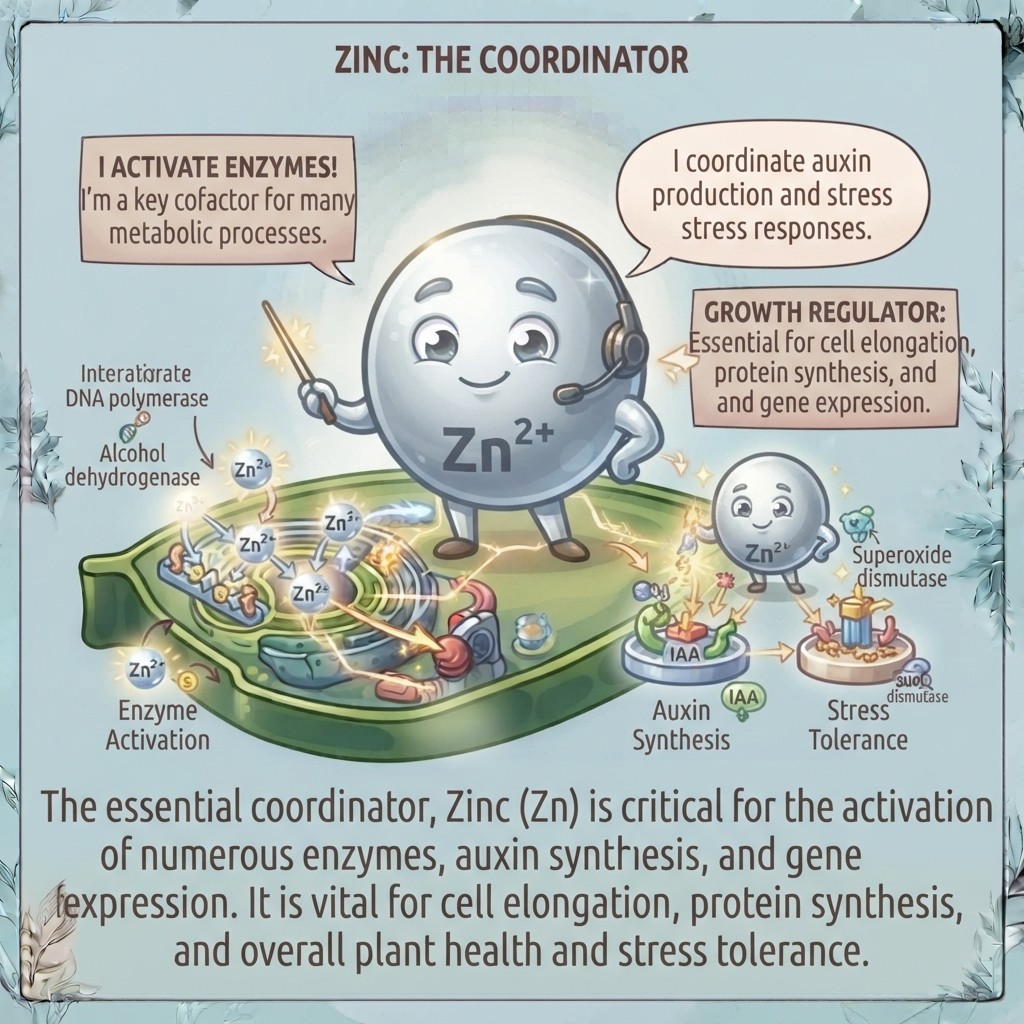
Zinc: The Coordinator
door
Buse Soysal
Plantsap
Bemestingsadvies
Voedingsinteracties
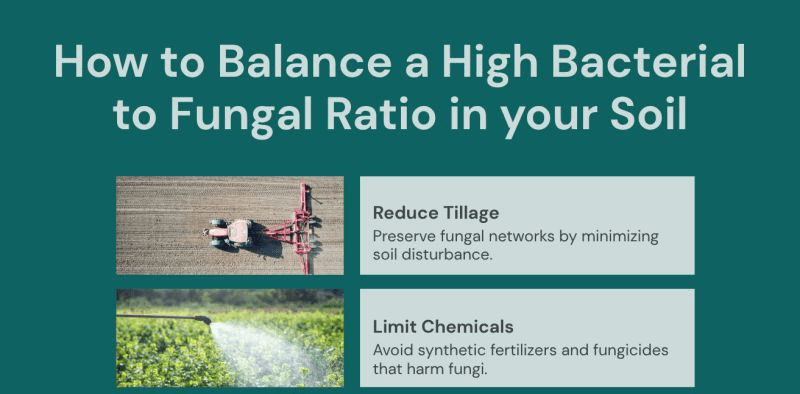
Hoe een hoge bacteriële naar schimmelverhouding in uw grond in balans te brengen
door
Buse Soysal
Bodemgezondheid
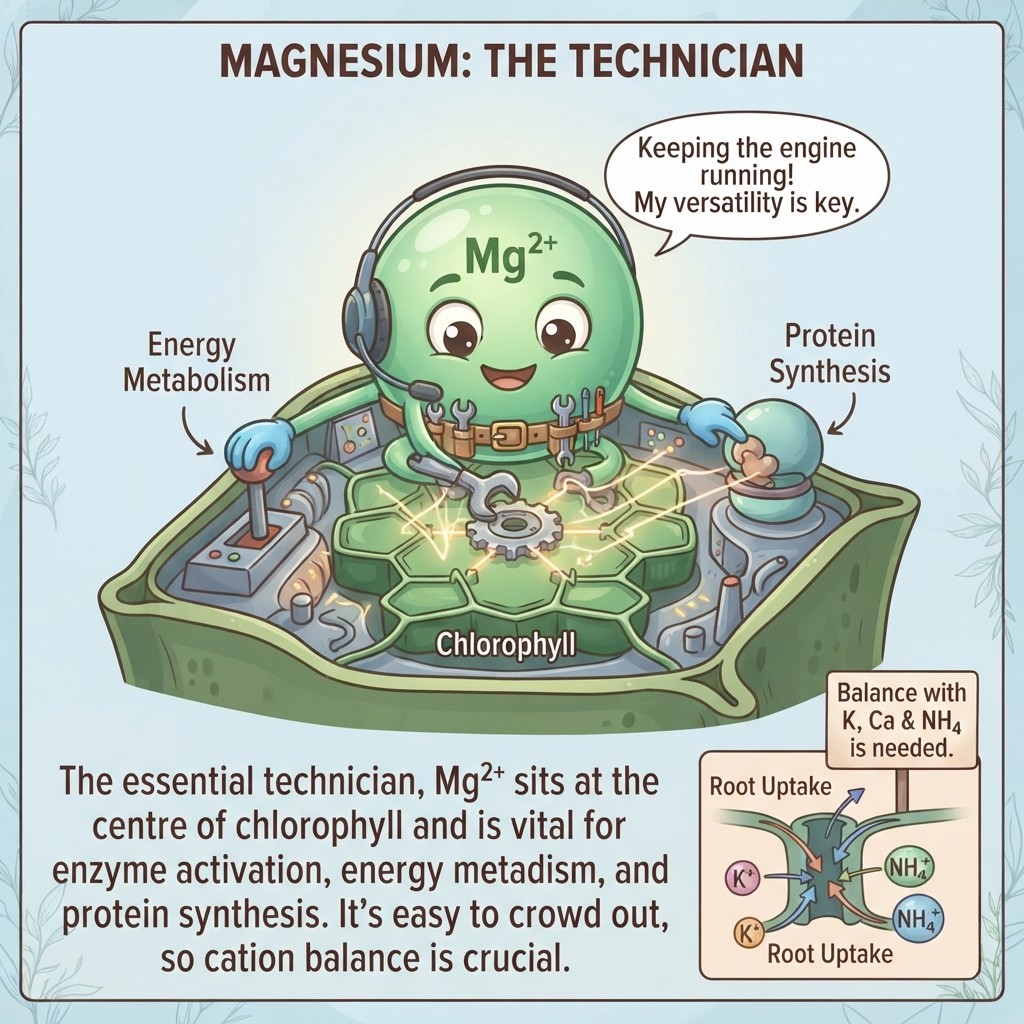
Magnesium: De regelaar
door
Buse Soysal
Plantsap
Bemestingsadvies
Voedingsinteracties
IJzer: De energiemotor

door
Buse Soysal
Plantsap
Bemestingsadvies
Voedingsinteracties
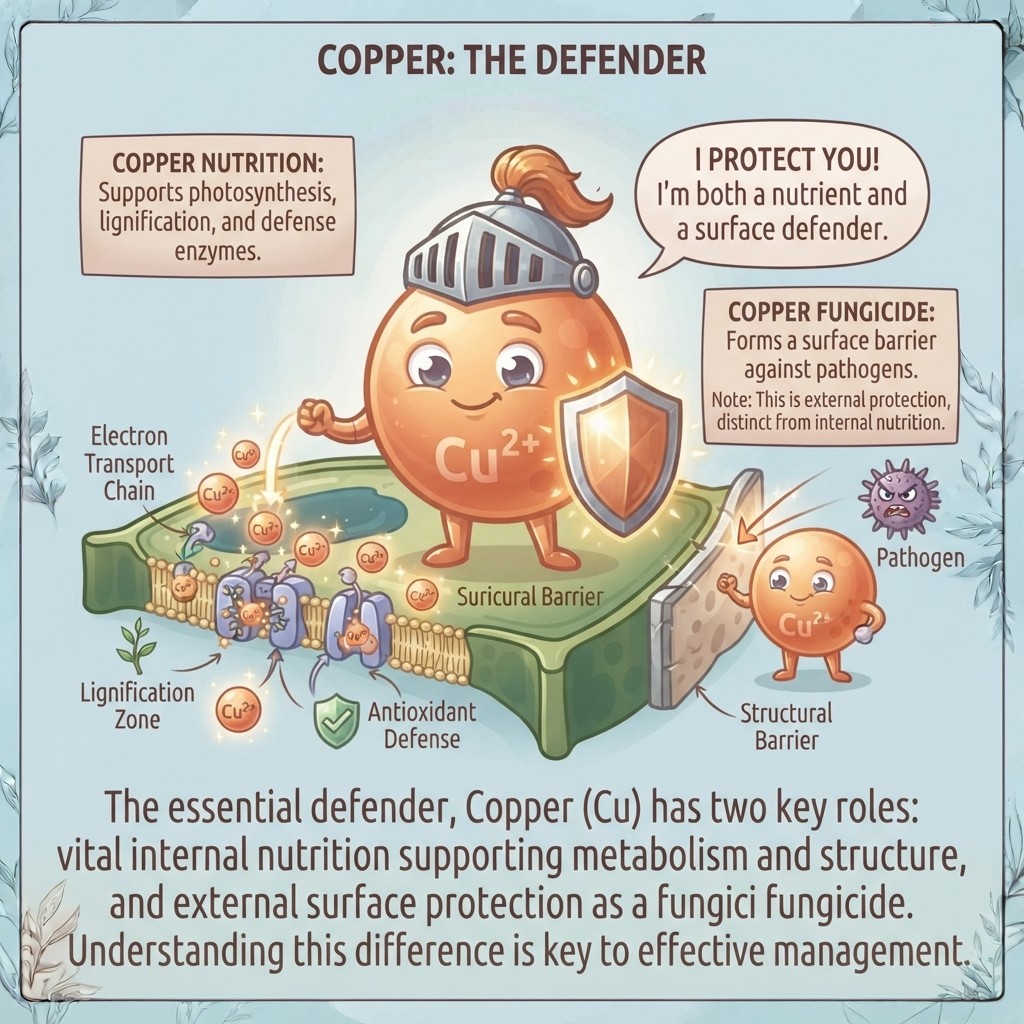
Koper: De beschermer
door
Buse Soysal
Plantsap
Bemestingsadvies
Voedingsinteracties
Molybdenum: The Facilitator

door
Buse Soysal
Plantsap
Bemestingsadvies
Voedingsinteracties
Magnesium: De Ongezongen Held van Fotosynthese
door
Buse Soysal
Voedingsinteracties
Stikstoffractie: De Bouwsteen
door
Buse Soysal
Plantsap
Slimmer boeren ontgrendelen met weer- en nutriëntenanalyse

door
Buse Soysal
Voedingsinteracties
Water Ontmoet Voedingsstrategie

door
Buse Soysal
Voedingsinteracties
Boor: De Schakel

door
Buse Soysal
Plantsap
Voedingsinteracties
Meststoffen
Calcium: De architect
door
Buse Soysal
Plantsap
Bemestingsadvies
Voedingsinteracties
Kalium: De logistiek manager

door
Buse Soysal
Plantsap
Fosfor: De Strateeg
door
Buse Soysal
Plantsap
Eenhedenconversie Ontmoet Cropprocessen

door
Buse Soysal
Bodemonderzoek
Bodembiologietests - Wat zijn uw opties?
door
Buse Soysal
Bodemonderzoek
Voorspel Problemen Voordat Ze Toeslaan — De Kracht van Plantsapanalyse
door
Buse Soysal
Data Analyse
Maximaliseren van de voordelen van dekgewassen voor uw teeltgewassen

door
Buse Soysal
Voedingsinteracties
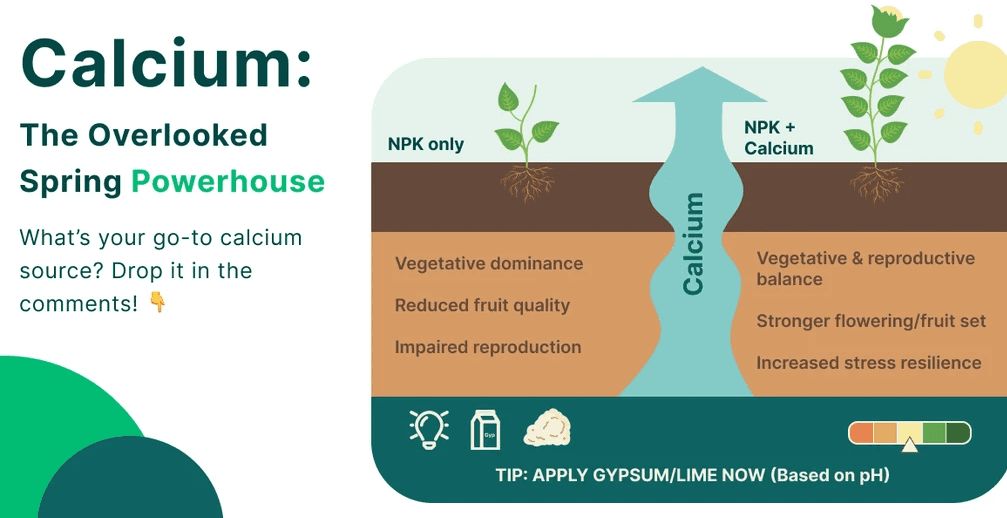
Calcium: De Overlookte Lente Krachtpatser
door
Buse Soysal
Voedingsinteracties
Snijden de kosten van kunstmest in uw winst?
door
Buse Soysal
Meststoffen
Vooruitgang in Precisie-irrigatie: Technologie gebruiken voor Duurzame Landbouw

door
Buse Soysal
Bodemgezondheid
Het Ontgrendelen van de Verborgen Helpers in de Landbouw: Microbieel Genomics en de Dataprobleem

door
Buse Soysal
Het belang van microbiele amendementen: Hoe de algehele gewasresistentie te vergroten

door
Buse Soysal
Bodemgezondheid
Het Ontgrendelen van Oogstpotentieel: De Ongenoemde Kracht van Plantenappelsanalyse

door
Buse Soysal
Regeneratieve Landbouw
Het ontgrendelen van koolstofcredits: welke gegevens boeren moeten bijhouden en hoe wij kunnen helpen

door
Buse Soysal
Data Analyse
Verbeteren van Onkruidbeheer: Het Benutten van Gegevensanalyse voor Duurzame Landbouw
door
Buse Soysal
Data Analyse
Het Verhogen van Gewasgezondheid met Brixmetingen: De Zoete Wetenschap van Plantenimmuniteit

door
Buse Soysal
Bodemgezondheid
Voedselbeheer en Ziekteresistentie: De Verborgen Verbindingen Onthuld Door Gegevensanalyse

door
Buse Soysal
Voedingsinteracties
Basisverzadiging Balanceren: Het Bereiken van de Ideale Verhouding voor Optimale Gewasproductie

door
Buse Soysal
Bodemgezondheid
Hoe nul overtollige vrije nitraten en ammonium in planten sapanalyse te bereiken

door
Buse Soysal
Regeneratieve Landbouw
Amerika's Bruisende Ruggengraat: De Cruciale Rol van Migrerende Bijenteelt in de Amerikaanse Landbouw

door
Buse Soysal
Bodemgezondheid
De grondbiologietests ontleden - De ROI vinden met PLFA-tests

door
Buse Soysal
Bodemonderzoek
Precisielandbouw: De landbouw revolutioneren, één veld tegelijk

door
Buse Soysal
Precisielandbouw
Ag101: Wat is het verschil tussen biologische en regeneratieve landbouw?
door
Buse Soysal
Bodemgezondheid
Je favoriete bonen zijn in gevaar: Bedreigingen voor de productie van koffie en chocolade
door
Buse Soysal
Bodemgezondheid
IPM-programma's: De beste maatregelen voor plaagpreventie

door
Buse Soysal
Ziekten & Plagen
Natte Lenteproblemen - Waarom Zo Onherstelbaar?

door
Buse Soysal
Voedingsinteracties
De Invloed van Voedseltoepassingen op de Post-Oogst
door
Buse Soysal
Voedingsinteracties
Sinaasappelsap in gevaar: De bedreiging van HLB-ziekte

door
Buse Soysal
Bodemgezondheid
California Dreaming: Het Probleem met Amandelproductie

door
Buse Soysal
Onzichtbare Zicht: Zinktekort in de Bodem

door
Buse Soysal
Voedingsinteracties
Strijd onder de grond: Begrijpen van Calcium - Kalium Antagonisme in Bodem

door
Buse Soysal
Voedingsinteracties
Het Krachtkoppel van het Plantenrijk: de Synergetische Symfonie van Stikstof en Zwavel

door
Buse Soysal
Voedingsstoffen voor Beginners
Verhoog de droogtetolerantie met deze vaak gemiste micronutriënt

door
Buse Soysal
Klimaatverandering
Dieper Graven: Het Grote Bodemanalyse Debat voor Regeneratieve Landbouw

door
Buse Soysal
Bodemgezondheid
Ammonium vs Calcium: De Nutriëntenbalans voor Beter Groeiende Planten

door
Buse Soysal
Voedingsinteracties
Verbeteren van de Bodemstructuur: Verhoog de Weerbaarheid van Uw Boerderij
door
Buse Soysal
Bodemgezondheid
Relatie tussen Natrium en Calcium: Een Verhaal van Vijanden in de Bodem

door
Buse Soysal
Voedingsinteracties
Het Bodemkantoor: De Bewogen Relatie Tussen Molybdeen en Nitraat
door
Buse Soysal
Voedingsinteracties
De Delicate Dans: Het Bereiken van de Perfecte Stikstofbalans voor Optimale Oogstproductiviteit

door
Buse Soysal
Voedingsinteracties
De Weg Effenen voor een Regeneratieve Toekomst: Inzichten in het "Data Gedreven Regeneratieve Landbouw" Project

door
Buse Soysal
Regeneratieve Landbouw
Het Volledige Potentieel van de Grond Ontgrendelen: De Pionierende Principes van Dr. William A. Albrecht

door
Buse Soysal
Bodemgezondheid
De voordelen van regeneratieve landbouw voor de menselijke gezondheid

door
Buse Soysal
Regeneratieve Landbouw
Verantwoordelijke Gegevensuitwisseling in de Landbouw

door
Buse Soysal
Data Analyse
Verantwoord gebruik van meststoffen om droogte te beperken

door
Buse Soysal
Klimaatverandering
De kracht van gezonde bodem: voor een blije Wereld Aarde Dag

door
Buse Soysal
Bodemgezondheid
Gewasinspectie voor regeneratieve landbouw
door
Buse Soysal
Regeneratieve Landbouw
Plantenvoeding en Bodemanalyse voor Stikstofemissiereductie
door
Buse Soysal
Regeneratieve Landbouw
Hoe gebruik je Plantvoeding voor Regeneratieve Landbouw?

door
Buse Soysal
Regeneratieve Landbouw
Winstgevendheid van regeneratieve landbouw en transitiemanagement

door
Buse Soysal
Regeneratieve Landbouw
Hoe kunnen we data-gedreven landbouw gebruiken voor een heldere toekomst?
door
Buse Soysal
Data Analyse
Plantenanalyse voor Meer Opbrengst en Minder Meststoffen

door
Buse Soysal
Regeneratieve Landbouw