01
Find the field’s history again
Locate the previous test, confirm the field and crop, and ask what has happened since.
Bring lab results, field observations and farm history together, reuse your recommendation methods and keep advice connected to what happens on the farm. Spend less time preparing reports and more time applying your expertise and working with growers.


Before you can advise, you need to establish what happened in this field. Finding, checking and reconnecting that information repeats with each new question.
Locate the previous test, confirm the field and crop, and ask what has happened since.
Match samples to fields and dates, check units and methods, and transfer values between reports and spreadsheets.
Rebuild calculations, charts, product selections and explanations that turn your analysis into practical advice.
Check where, when and at what rate the grower acted on the advice before making the next decision.
“SoilBeat is a tool that does 75% of the work in half the time. I still adjust, tweak, and add insights along with my own observations into the custom report.”
Build your own estimate of annual hours saved per advisor and farmer customer, using your workload and adjustable assumptions.
Make better recommendations, reduce repetitive preparation and work more closely with growers. Keep evidence, advice and follow-up connected as your practice grows.
Nieuwe data voedt de volgende beslissing — zo blijft de agronomische cyclus verbonden.
SoilBeat brengt rapportages, metingen, veldobservaties en bedrijfscontext samen in één gestructureerd dossier — zodat u minder tijd besteedt aan data-voorbereiding en meer tijd aan de interpretatie ervan.

SoilBeat helpt u verder te kijken dan losse laboratoriumresultaten door trends te vergelijken, metingen te koppelen aan veldwaarnemingen en de volledige bedrijfshistorie te analyseren voordat u adviseert.
The same result can lead to different actions when the field history changes. Review the evidence and field context before deciding whether an intervention makes sense.
Has the nutrient already been applied? Could dry conditions or root problems be restricting uptake? Is the result comparable with the previous sample?
Diagnostic framework: Missouri Extension| Work SoilBeat helps reduce | Where you add value |
|---|---|
| Re-entering lab values and assembling records | Checking evidence and identifying gaps |
| Rebuilding charts and report structure | Interpreting trends and diagnosing causes |
| Repeating established formulas and templates | Validating calculations and adjusting the plan |
| Recreating tasks after issuing advice | Discussing priorities and reviewing outcomes |
Build formula-based prescriptions, multizone plans and customised advisor recommendations from connected farm evidence. Reuse formulas and report templates, then check the calculations, adjust the products and rates, and approve the advice.
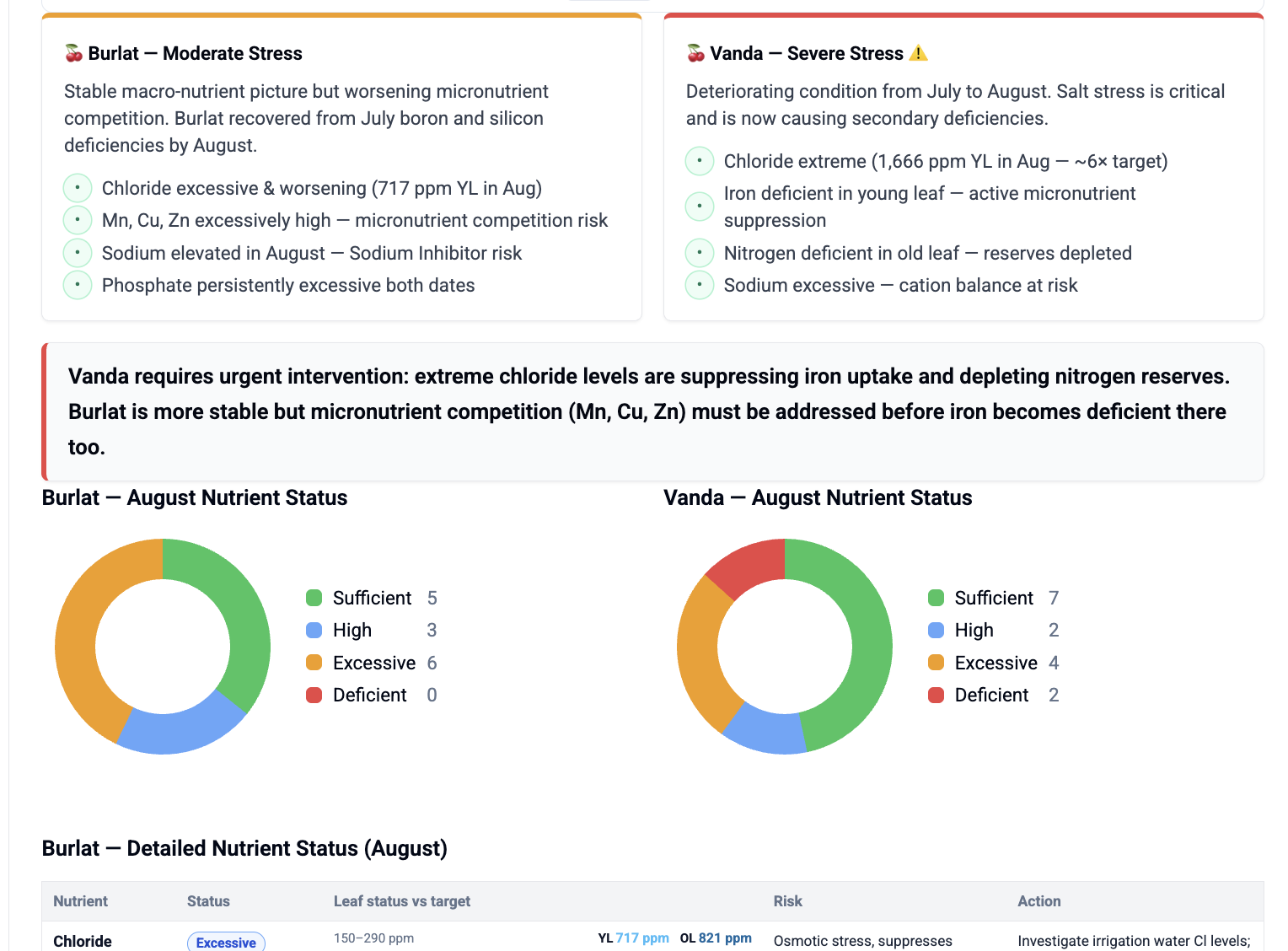
Automate the repetitive work around the recommendation — not the agronomist’s judgement.
Een advies is waardevoller als de vervolgstap meteen duidelijk is. SoilBeat koppelt uitgebrachte adviezen direct aan de Activiteitenmodule, zodat telers, adviseurs en buitendienstmedewerkers snel en eenvoudig van advies naar uitvoering kunnen overgaan.
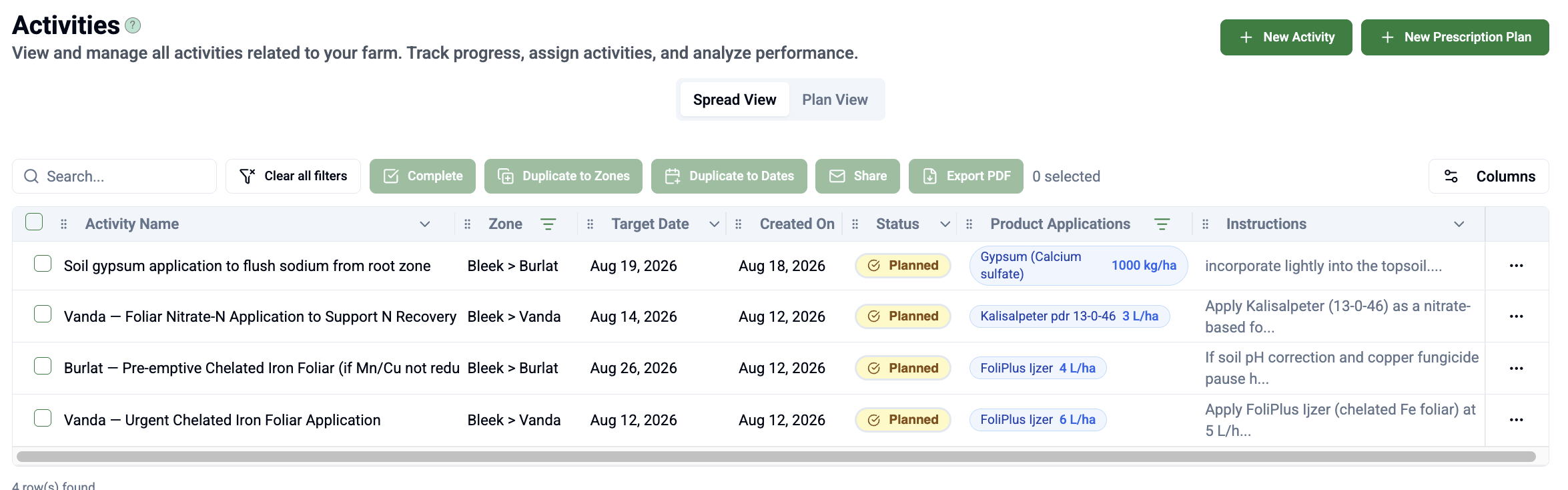
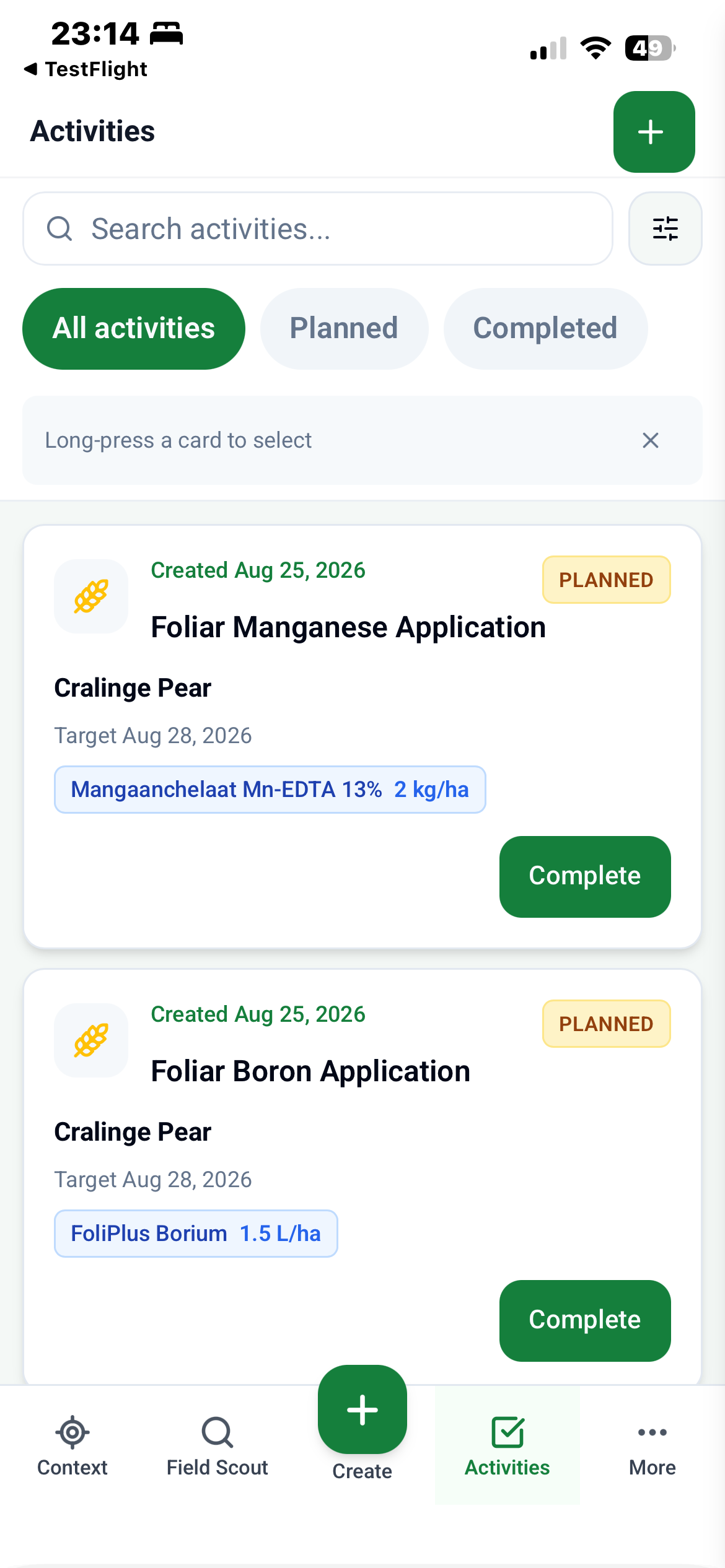
Zodra een advies is gepubliceerd, verschijnen de bemestings- en gewasbeschermingsactiviteiten direct op het activiteitenscherm van de teler — zonder dat taken opnieuw moeten worden aangemaakt.
The grower can see the planned work and record it as done after completion. A planned activity and a recorded completion are different facts.
Activiteiten kunnen ook aan veldtechnici worden toegewezen, zodat het advies en de uitvoerders verbonden blijven.
Gebruik mobiele spraakinvoer om direct in het veld activiteiten te registreren. Dit bespaart agronomen en telers handmatig schrijfwerk en administratie achteraf.
Een duidelijke takenlijst, met minder administratie en een eenvoudige manier om gereedmeldingen door te geven.
Minder tijd kwijt aan het omzetten van adviezen in losse taken, eenvoudiger delegeren en een duidelijker overzicht van de opvolging na publicatie.
Published advice creates activities. Growers record completion, and that update adds context for the next decision.
→Review recommended actions, activities recorded as completed, and subsequent observations together. The next decision can build on that history.
Use completion updates as reported evidence of work carried out. Confirm application details with the grower where the next decision depends on them.
Gedurende het seizoen leveren veldobservaties, scoutinggegevens en nieuwe metingen aanvullend bewijs.
De volgende analyse kan direct gebruikmaken van de gekoppelde historie, zodat u het verloop niet handmatig hoeft te reconstrueren uit losse notities, bestanden en gesprekken.
Advies leidt tot actie. Actie schept een nieuwe context. Deze nieuwe context verbetert de volgende teeltbeslissing.
Keep your formulas, templates and chosen products ready for the next client plan. Reduce repeated preparation while adapting every recommendation to the field and the grower.
Keep your interpretation logic, priorities and recommendation approach inside your workflow, so each new plan builds on the methods you already trust.
Reuse formulas, product selections and report templates across your client plans. Check the evidence, adjust the rates and customise the advice for each farm and management zone.
Deliver clear recommendations in your own language and report structure. Keep the advice connected to activities and follow-up so grower conversations build on the same field record.
Spend less time rebuilding records and reports as your client base grows. Keep more time for diagnosis, field visits and the agronomic details that matter.
Discuss how your methodology can fit a consistent, reviewable advisory workflow.
Working across a team? Explore team workflowsAI can help investigate evidence and draft advice. SoilBeat connects that work to a continuing farm record and your advisory process.
Useful for reasoning and drafting from the information you supply. Field history and subsequent work need to be brought into the conversation.
Measurements, history, observations and recorded activities stay together. Apply your formulas and templates, review the recommendation, and keep the next actions connected.
Independent research and extension guidance support the need for connected evidence and field-specific judgement.
These sources describe advisory work and farm data challenges. They do not measure SoilBeat’s performance or establish a universal time saving per recommendation.
SECURITY & CONFIDENTIALITY
Using AI in agronomy raises practical questions: who can access farmer information, what reaches an AI provider, and how recommendations are reviewed before reaching clients. Talk to us about your workflow and data-protection requirements.
We provide a mutual NDA before exchanging confidential information, including proprietary agronomic methods, formulas and commercial details.
Start with one field, bring the evidence together and prepare recommendations using your own methods. Keep the grower’s actions and new observations connected for the next decision.