01
Find the field’s history again
Locate the previous test, confirm the field and crop, and ask what has happened since.
Bring lab results, field observations and farm history together, reuse your recommendation methods and keep advice connected to what happens on the farm. Spend less time preparing reports and more time applying your expertise and working with growers.


Before you can advise, you need to establish what happened in this field. Finding, checking and reconnecting that information repeats with each new question.
Locate the previous test, confirm the field and crop, and ask what has happened since.
Match samples to fields and dates, check units and methods, and transfer values between reports and spreadsheets.
Rebuild calculations, charts, product selections and explanations that turn your analysis into practical advice.
Check where, when and at what rate the grower acted on the advice before making the next decision.
“SoilBeat is a tool that does 75% of the work in half the time. I still adjust, tweak, and add insights along with my own observations into the custom report.”
Build your own estimate of annual hours saved per advisor and farmer customer, using your workload and adjustable assumptions.
Make better recommendations, reduce repetitive preparation and work more closely with growers. Keep evidence, advice and follow-up connected as your practice grows.
New evidence feeds the next decision — keeping the agronomic cycle connected.
SoilBeat brings reports, measurements, field observations and farm context into one structured record — so you spend less time preparing information and more time interpreting what it means.

SoilBeat helps you move beyond isolated lab results by comparing trends, connecting measurements to field events and exploring the full farm record before you recommend.
The same result can lead to different actions when the field history changes. Review the evidence and field context before deciding whether an intervention makes sense.
Has the nutrient already been applied? Could dry conditions or root problems be restricting uptake? Is the result comparable with the previous sample?
Diagnostic framework: Missouri Extension| Work SoilBeat helps reduce | Where you add value |
|---|---|
| Re-entering lab values and assembling records | Checking evidence and identifying gaps |
| Rebuilding charts and report structure | Interpreting trends and diagnosing causes |
| Repeating established formulas and templates | Validating calculations and adjusting the plan |
| Recreating tasks after issuing advice | Discussing priorities and reviewing outcomes |
Build formula-based prescriptions, multizone plans and customised advisor recommendations from connected farm evidence. Reuse formulas and report templates, then check the calculations, adjust the products and rates, and approve the advice.
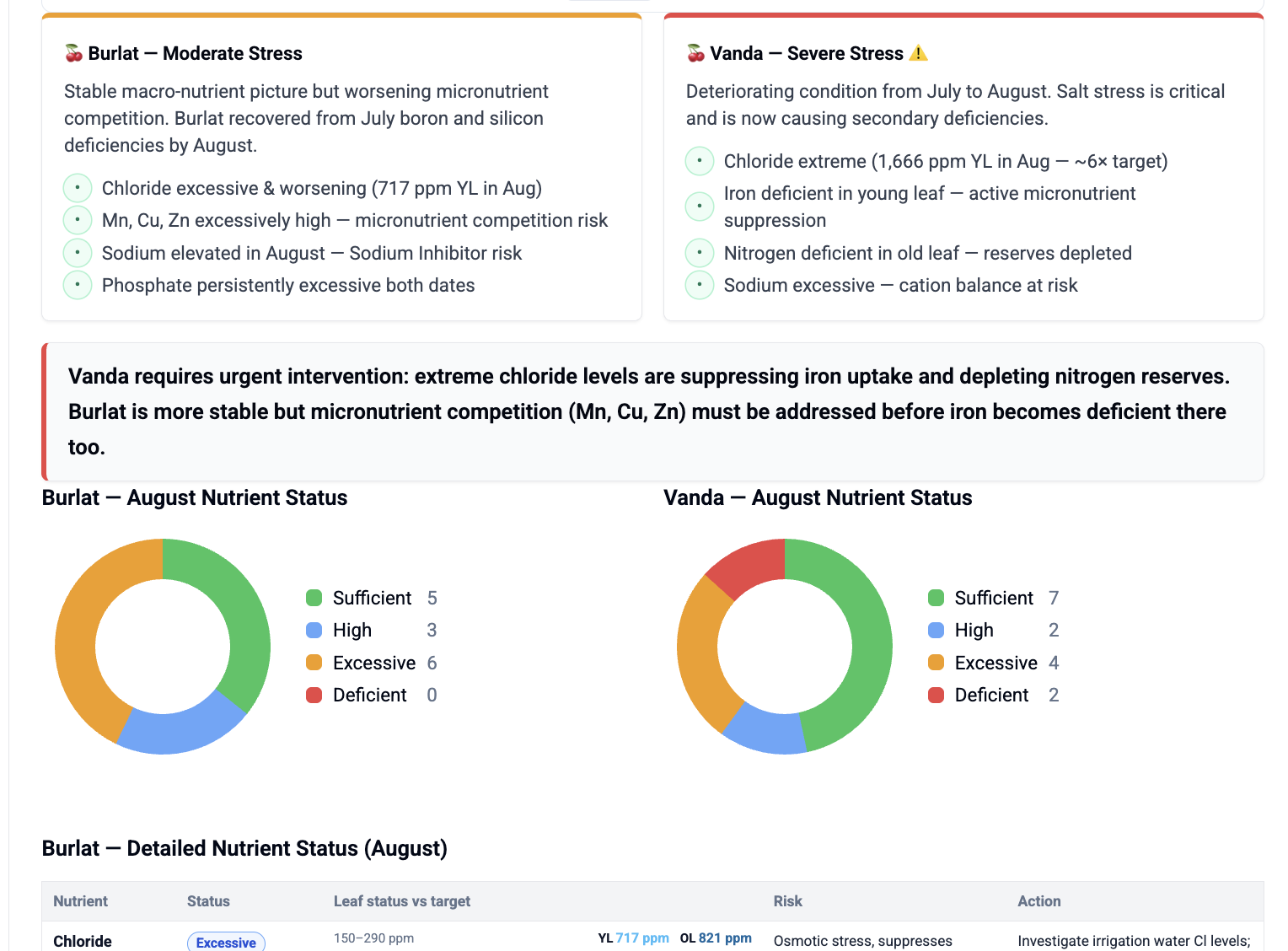
Automate the repetitive work around the recommendation — not the agronomist’s judgement.
A recommendation becomes more useful when the next action is already clear. SoilBeat connects published advice directly to the Activities module, giving farmers, agronomists and field technicians a simple way to move from recommendation to execution.
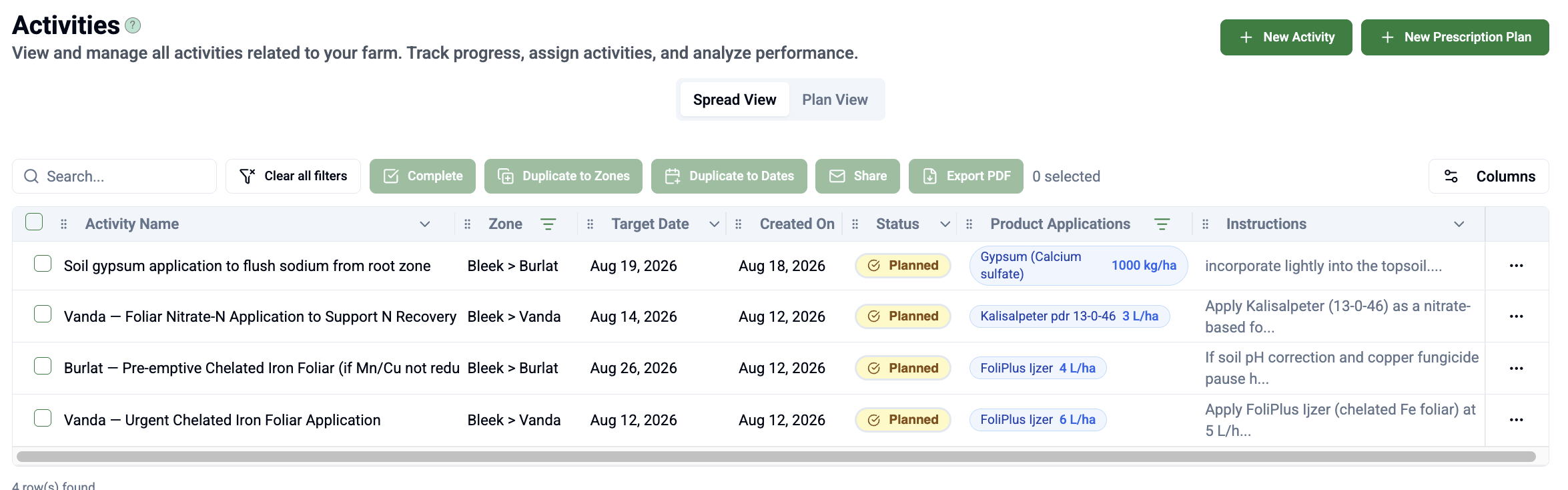
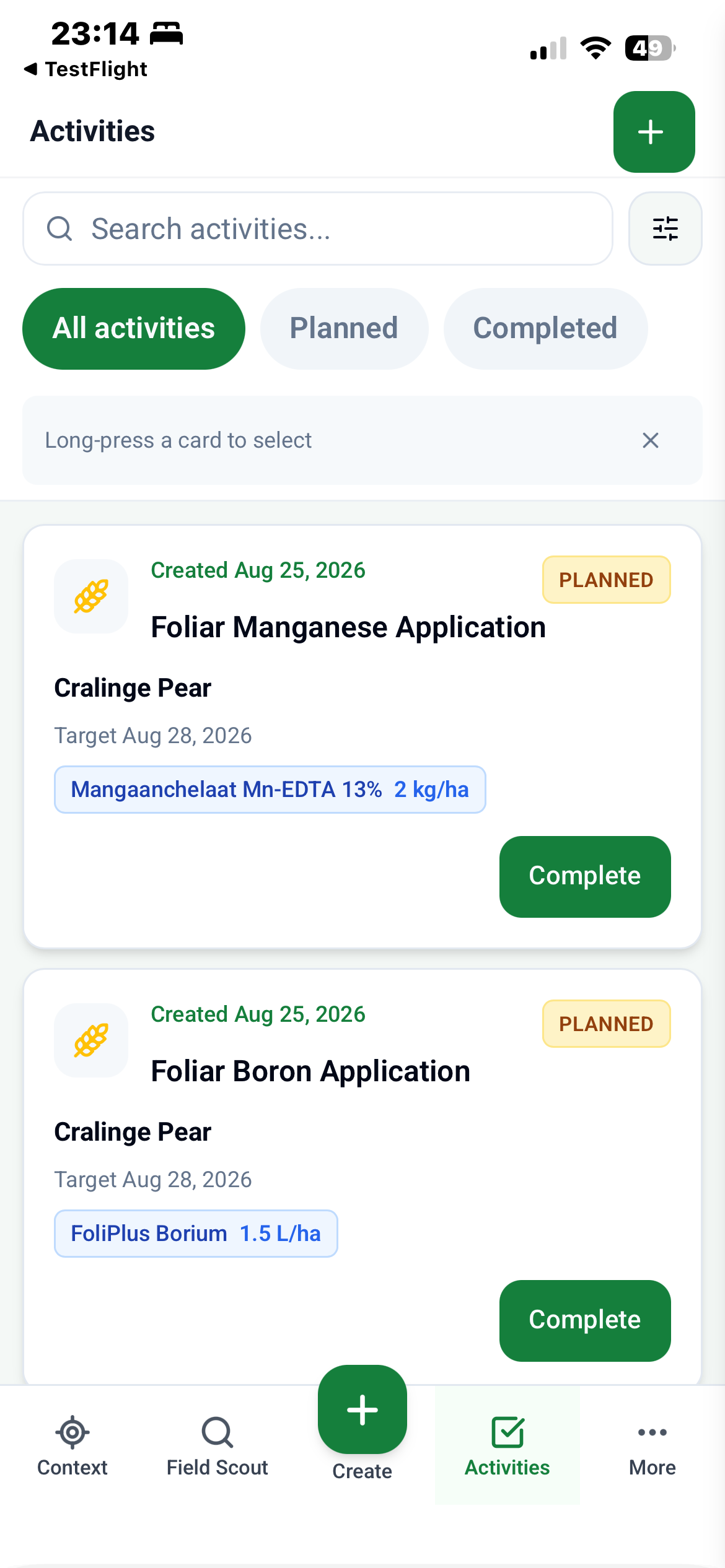
When a recommendation is ready and published, its fertilisation and crop-protection activities appear on the farmer’s Activities screen — without having to create the tasks again.
The grower can see the planned work and record it as done after completion. A planned activity and a recorded completion are different facts.
Activities can also be assigned to field technicians, keeping the recommendation and the people carrying out the work connected.
Use mobile voice input to capture and create activities while walking the field, reducing note-taking and follow-up administration for both agronomists and farmers.
A clear list of what needs doing, with less administration and a simple way to confirm when the work is complete.
Less time translating recommendations into separate tasks, easier delegation and a clearer view of what happens after the advice is published.
Published advice creates activities. Growers record completion, and that update adds context for the next decision.
→Review recommended actions, activities recorded as completed, and subsequent observations together. The next decision can build on that history.
Use completion updates as reported evidence of work carried out. Confirm application details with the grower where the next decision depends on them.
As the season develops, field observations, scouting information and new measurements add another layer of evidence.
The next interpretation can use the connected history instead of requiring the agronomist to reconstruct the story from separate notes, files and conversations.
Advice becomes action. Action creates new context. New context improves the next agronomic decision.
Keep your formulas, templates and chosen products ready for the next client plan. Reduce repeated preparation while adapting every recommendation to the field and the grower.
Keep your interpretation logic, priorities and recommendation approach inside your workflow, so each new plan builds on the methods you already trust.
Reuse formulas, product selections and report templates across your client plans. Check the evidence, adjust the rates and customise the advice for each farm and management zone.
Deliver clear recommendations in your own language and report structure. Keep the advice connected to activities and follow-up so grower conversations build on the same field record.
Spend less time rebuilding records and reports as your client base grows. Keep more time for diagnosis, field visits and the agronomic details that matter.
Discuss how your methodology can fit a consistent, reviewable advisory workflow.
Working across a team? Explore team workflowsAI can help investigate evidence and draft advice. SoilBeat connects that work to a continuing farm record and your advisory process.
Useful for reasoning and drafting from the information you supply. Field history and subsequent work need to be brought into the conversation.
Measurements, history, observations and recorded activities stay together. Apply your formulas and templates, review the recommendation, and keep the next actions connected.
Independent research and extension guidance support the need for connected evidence and field-specific judgement.
These sources describe advisory work and farm data challenges. They do not measure SoilBeat’s performance or establish a universal time saving per recommendation.
SECURITY & CONFIDENTIALITY
Using AI in agronomy raises practical questions: who can access farmer information, what reaches an AI provider, and how recommendations are reviewed before reaching clients. Talk to us about your workflow and data-protection requirements.
We provide a mutual NDA before exchanging confidential information, including proprietary agronomic methods, formulas and commercial details.
Start with one field, bring the evidence together and prepare recommendations using your own methods. Keep the grower’s actions and new observations connected for the next decision.